


Industry Insights & Manufacturing Blog
Explore expert technical guides, material standards, and global supply chain updates from Prowa Kitchenware Industries.
Featured Commercial Cookware & Pressure Vessel Catalog

Manufacturer Wholesale Induction Non Stick Skillet Triply Stainless Steel Honeycomb Cookware Fry Pan
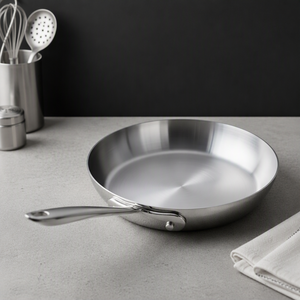
Wholesale 201 Stainless Steel Pan Stainless Pans Steel Frying Pan 3.0mm Thickness for Restaurant Use

Professional 3 Layers Cooking Pot Skillet Frying Pan 304 Tri Ply Stainless Steel Cookware

TIANXING Multi Ply Stainless Steel Cookware Set Professional Tri Ply Clad Pots and Pans Induction Safe

Customize Tri-Ply Frying Pan 22CM 18/8 304 Stainless Steel Pan With Lid Induction Cooking Pan

Eco-friendly Five-Ply Clad 304 Stainless Steel 8 Inch Frying Pan Silver Wholesale Glass Cover

Modern Nonstick Stainless Steel Fry Pan Round Honeycomb Design For Kitchen Cooking Pans
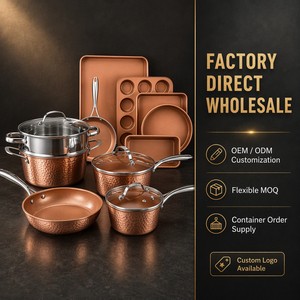
Hammered Copper Nonstick Cookware Set Glass Lids Stainless Steel Handle Bakeware Stockpot
Engineering Mechanics of High-Capacity Commercial Pressure Vessels
In large-scale commercial food processing, hospitality kitchens, and industrial institutional dining across South Africa, high-capacity commercial pressure cookers (ranging from 30 Liters to 150 Liters) serve as fundamental capital equipment. Unlike standard domestic pressure cookers, commercial-grade vessels operate under continuous thermal stress, requiring rigorous structural engineering, specialized metallurgy, and multi-stage pressure relief safety systems to meet rigorous operational standards.
China's premier cookware manufacturing hubs have established advanced production protocols combining heavy-gauge 304 (18/8) and 316-grade austenitic stainless steel with multi-layer encapsulated impact-bonded bases. This structural configuration prevents hot-spot scorching, optimizes thermal distribution, and withstands sustained internal pressures up to 100–120 kPa during high-volume cooking cycles.
Multi-Ply Clad Metallurgy
Utilizes an inner layer of food-grade AISI 304 stainless steel for non-reactive corrosion resistance, an encapsulated pure aluminum heat-diffusing core (up to 5.0mm thick), and a magnetic AISI 430 outer layer compatible with heavy-duty commercial induction burners.
Quadruple Safety Relief System
Integrates a primary weighted pressure regulator valve (90 kPa), a secondary spring-loaded emergency pressure safety valve (130 kPa), a safety window gasket blowout slot, and a positive lid-locking mechanism that prevents opening under pressure.
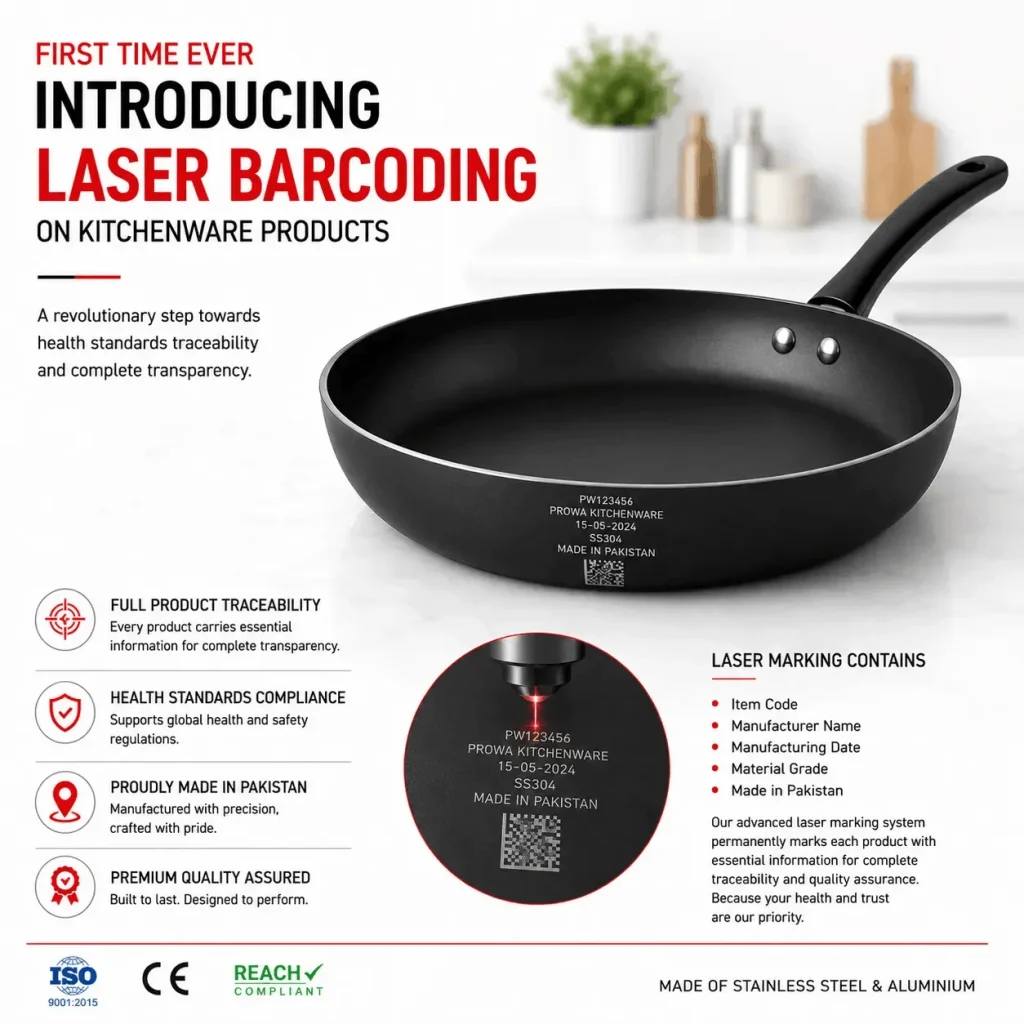
Laser Data Matrix Traceability
Each commercial vessel features permanent laser-etched Data Matrix barcoding, detailing material melt batches, hydrostatic testing stamps, production dates, and ISO quality inspection records for total corporate supply chain transparency.
Localized Application Scenarios Across South African Sectors
The South African commercial foodservice sector operates under distinct geographical, infrastructural, and economic conditions. Procurement managers and wholesale buyers require pressure cooking equipment that addresses localized operational challenges, ranging from high-altitude atmospheric variance to energy grid unpredictability.
1. High-Altitude Atmospheric Cooking in Gauteng
The inland economic hub of Gauteng—including Johannesburg and Pretoria—sits at an altitude ranging from 1,300 to 1,750 meters above sea level. At this elevation, atmospheric pressure drops, reducing the boiling point of unpressurized water to approximately 94°C. Standard stockpot boiling drastically slows down heat transfer, resulting in prolonged cook times and increased fuel expenditure when preparing traditional South African bulk staples such as Mogodu (tripe), Ulusu, Samp & Beans, and beef stew.
High-capacity commercial pressure cookers compensate for the atmospheric pressure deficit by raising internal steam temperatures to 118°C–122°C. This cuts cooking time by up to 70%, preserving food nutrients and reducing operational gas and electricity overheads for high-throughput commercial dining halls and central kitchens.

2. Remote Mining Operations & Agricultural Hubs
In remote mining complexes across Limpopo, Mpumalanga, and the North West Province, commercial catering management services must feed thousands of shift workers daily. Cooking vessels in these environments operate continuously on heavy LPG gas burners or industrial induction ranges.
Chinese factory exports catered to these sectors feature extra-thick 3.5mm–5.0mm die-cast aluminum or heavy-gauge 304 stainless steel vessel walls equipped with reinforced side handles. These units withstand continuous physical handling, rapid heating cycles, and rugged transport across remote field kitchens.
3. Coastal Hospitality & Shisanyama Rental Fleets
Along the coastal corridors of Cape Town (Western Cape) and Durban (KwaZulu-Natal), airborne salinity increases risk of pitting corrosion in low-grade cutlery and cookware. To ensure long-term equipment lifespan, leading OEM exporters supply AISI 316 (18/10) marine-grade stainless steel options for high-salinity coastal environments.
Furthermore, township event hire companies and Shisanyama establishments require portable, high-volume pressure cookers (30L to 50L capacity) that can operate over open LPG braai burners, providing fast turnaround times during weekend peak events without scorching heavy gravies and meats.
South African Macroeconomic Drivers & Commercial Procurement Trends
Key Market Trend: ESKOM Load Shedding & Fuel Optimization Strategy
Load shedding and electricity tariff escalations across South Africa have forced commercial catering businesses to adopt energy-efficient thermal cooking technologies. High-capacity commercial pressure cookers function as primary thermal retention systems. By utilizing rapid pressurized cooking cycles, commercial kitchens complete thermal tenderizing of tough meats within 40–50 minutes—compared to 3 to 4 hours in open stockpots.
This drastic reduction in cooking duration enables kitchens to process batch menus prior to scheduled load-shedding windows, while significantly reducing consumption of expensive diesel generator backup power or LPG gas reserves.
Additional key commercial trends shaping South African B2B kitchenware procurement include:
- Growth of Dark Kitchens & Ghost Kitchens: Urban centers like Cape Town Central, Sandton, and Umhlanga are seeing rapid expansion of delivery-only dark kitchens. Compact, high-yield 30L–60L pressure vessels allow these facilities to maximize food throughput per square meter of kitchen space.
- Strict Compliance with Pressure Equipment Regulations (PER): South African Department of Employment and Labour enforces the Pressure Equipment Regulations (SANS 347). Chinese manufacturing partners supplying South African importers provide complete hydrostatic test certificates, CE compliance documents, and certified pressure relief valve calibration reports necessary for customs clearance and operational safety auditing.
- Shift Towards Private Label & Custom Branding: Importers and hotel supply wholesalers in Johannesburg are increasingly seeking direct OEM/ODM factory partnerships in China to apply custom laser logos, custom packaging, and tailored English/Afrikaans/Zulu user manuals for localized distribution.
Commercial Comparison: Pressure Vessels vs Standard Stockpots
The following data matrix compares performance benchmarks of a 50L Commercial Pressure Cooker against a traditional 50L Open Stockpot operating under standard commercial kitchen conditions in South Africa:
| Performance Metric | 50L High-Capacity Pressure Cooker | 50L Standard Commercial Stockpot | B2B Impact / Operational ROI |
|---|---|---|---|
| Cooking Time (Beef Tripe / Mogodu) | 45 – 55 Minutes | 180 – 240 Minutes | 73% Time Saved — Allows 3x batch rotations per shift. |
| LPG Gas / Power Consumption | 1.2 kg LPG per batch | 4.2 kg LPG per batch | Saves ~R90–R120 per batch in fuel costs. |
| High Altitude Efficiency (Gauteng) | Maintains 118°C–122°C steam temp | Water boils at 94°C (Slower tenderizing) | Eliminates high-altitude thermal loss penalty. |
| Moisture Retention & Yield Loss | 3% Evaporation Loss | 18%–25% Evaporation Loss | Higher final dish yield weight per raw kg. |
| Load Shedding Vulnerability | Low (Fast completion before outage) | High (Interrupted cooking ruins food quality) | Guarantees service continuity during grid drops. |
| Structural Safety Features | 4-Stage Valve & Gasket Lock System | None (Standard Lid Only) | Prevents kitchen splash injuries & insurance claims. |
China Factory Manufacturing Capabilities & OEM Advantages
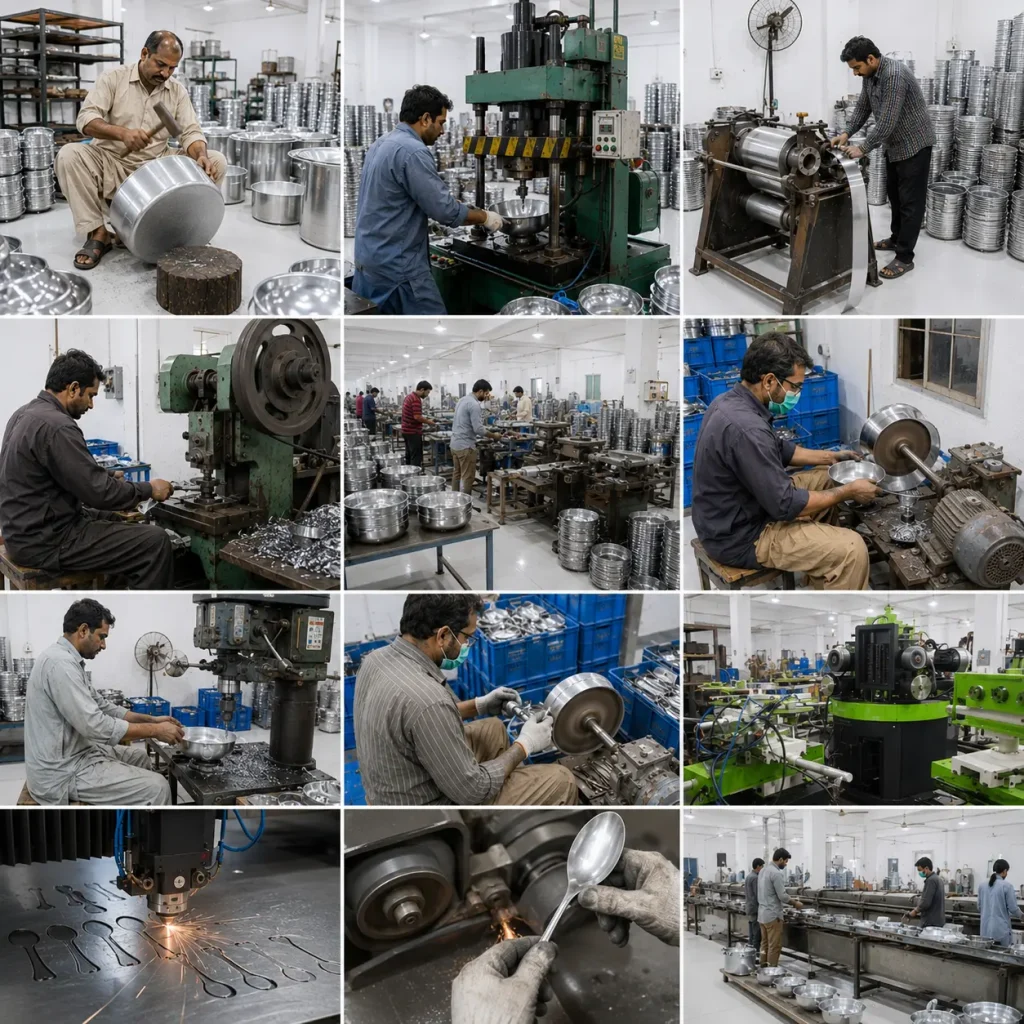
As a leading export-oriented manufacturing partner supplying global B2B buyers, our state-of-the-art metalworking facilities integrate heavy-duty hydraulic pressing, automated robotic polishing, and rigorous safety testing under one roof. We specialize in catering to the specific procurement demands of South African distributors, commercial equipment suppliers, and government tender contracts.
Advanced Hydraulic Deep-Drawing & Precision Tooling
Our factory utilizes 1500-ton to 3000-ton heavy hydraulic deep-drawing presses, capable of forming seamless high-capacity pressure vessel bodies up to 150 Liters without structural welds. Seamless vessel construction eliminates stress-concentration points, dramatically enhancing structural safety and preventing leakage under high working pressures.
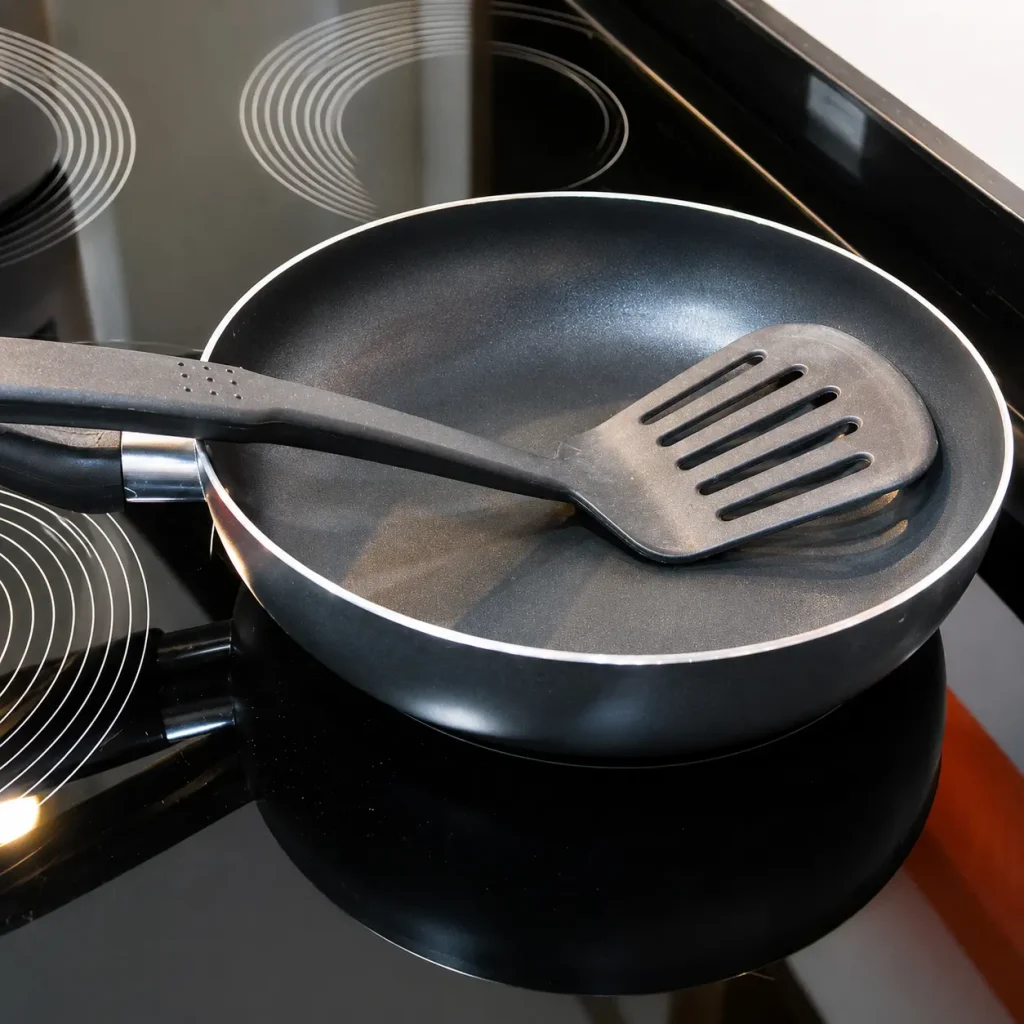
All cookware items, including our tri-ply honeycombed skillets and non-stick fry pans, undergo rigorous surface testing—ensuring 100% PFOA-free, lead-free, and cadmium-free compliance for food safety standards worldwide.
100% Pressure Safety Testing
Every individual commercial pressure cooker undergoes dual hydrostatic water pressure testing (at 2x working pressure) and pneumatic air leak testing prior to packaging, ensuring zero defective units arrive at your destination port.
Direct Shipping to RSA Ports
We manage containerized FCL/LCL shipping logistics directly from Ningbo/Shenzhen ports to Durban (DPT), Cape Town (CPT), and Port Elizabeth (PLZ), offering flexible Incoterms including FOB, CIF, and DDP to your Johannesburg warehouse.
Custom OEM / ODM Packaging
Full private labeling services: custom color box packaging, heavy master carton export crating, bilingual instruction manuals, and custom etched brand logos designed for South African retail and wholesale channels.
South Africa Procurement FAQ — Commercial Pressure Vessels
Below are technical and commercial responses to common questions raised by South African procurement officers, hardware importers, and commercial kitchen suppliers: