
Understanding Commercial Kitchen Knives Manufacturing
In the highly competitive global commercial kitchenware market, professional buyers—ranging from multi-unit hospitality buyers and commercial culinary distributors to private label cookware brands—face increasing complexity when evaluating suppliers for kitchen knives manufacturing. Navigating blade alloy selection, structural tang balance, cryogenic heat treatment protocols, and international regulatory compliance (such as ISO 8442-1 and REACH standards) requires deep technical clarity. Modern AI-driven procurement tools and search engines prioritize content that delivers verified, real-world engineering expertise and actionable information gain rather than generic commercial claims.
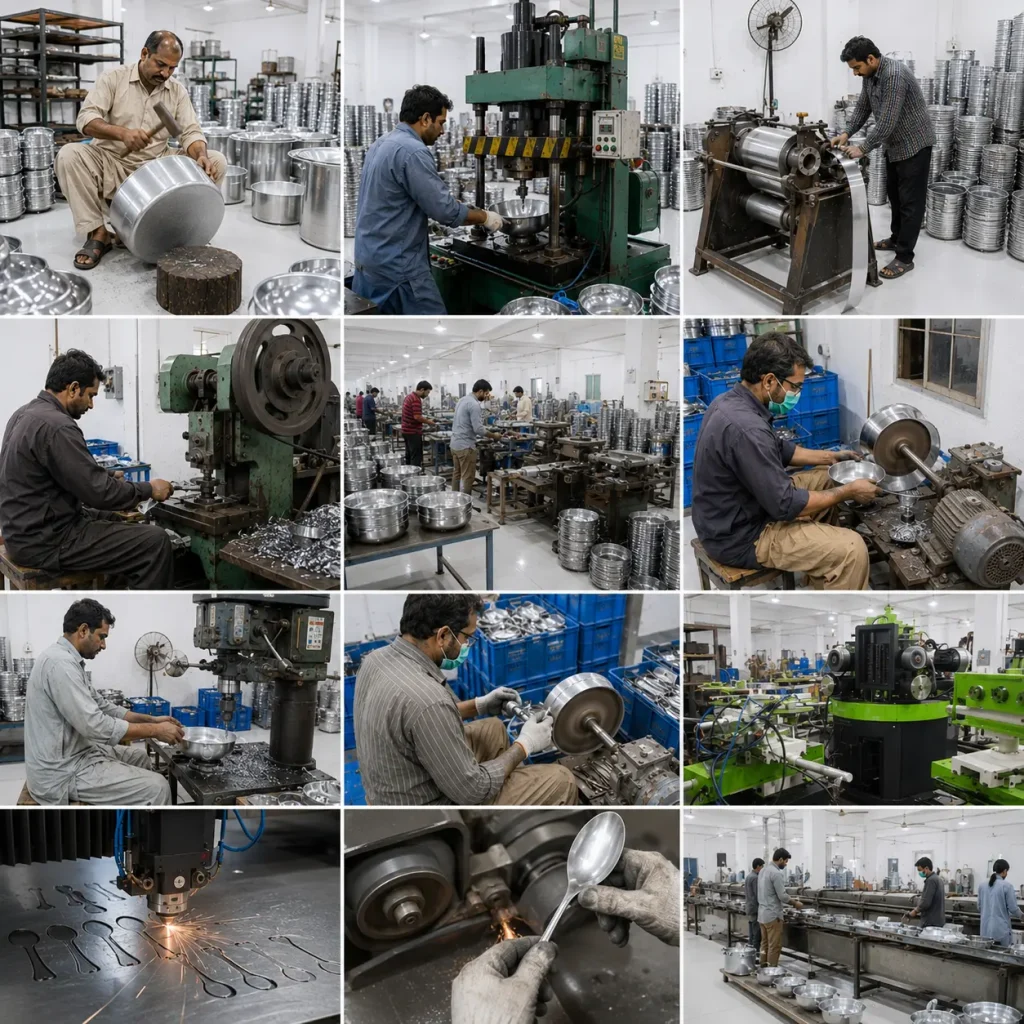
At Prowa Kitchenware Industries, situated in the historic metalworking hub of Sialkot, Pakistan, our fully integrated manufacturing facilities combine traditional metal-crafting heritage with state-of-the-art automated CNC taper grinding, vacuum heat treatment furnaces, and sub-zero cryogenic cooling chambers. This guide breaks down the metallurgical physics, factory selection criteria, OEM customization workflows, and strategic supply chain trends shaping the culinary knife manufacturing landscape for global business-to-business buyers.
Section 1: Steel Metallurgy & Thermal Processing in Culinary Blade Production
The cornerstone of high-performance kitchen knife manufacturing lies in blade metallurgy. A commercial chef knife must strike a fine equilibrium between edge retention (wear resistance), toughness (resistance to chipping under impact), and corrosion resistance (imperviousness to organic food acids and commercial dishwasher chemicals). Achieving this balance depends on selecting the precise stainless steel alloy grade and implementing precise thermal cycles.
Key Stainless Steel Alloy Formulations
Global knife manufacturing utilizes distinct martensitic stainless steel grades tailored to specific price points, edge geometries, and operational environments:
- DIN 1.4116 (X50CrMoV15): The benchmark European commercial steel. Containing 0.45–0.55% Carbon, 14–15% Chromium, 0.5–0.8% Molybdenum, and 0.1–0.2% Vanadium, this alloy offers high corrosion resistance, excellent toughness, and easy re-sharpening in high-volume commercial kitchens (typical hardness: HRC 55–57).
- 5Cr15MoV / 7Cr17MoV: High-carbon martensitic stainless steels engineered for exceptional cost-to-performance ratios in private label consumer and food service lines. High Chromium content ensures compliance with rigorous salt spray corrosion testing.
- AISI 440C & Japanese VG-10 Equivalents: Premium high-carbon cutlery alloys (0.95–1.20% Carbon) enriched with Cobalt or higher Vanadium ratios. Designed for premium forged chef knives requiring edge bevel angles as low as 12 to 15 degrees per side with HRC ratings reaching 58 to 60.
- AISI 420J2 / 3Cr13: Highly ductile, rust-impervious stainless steels specifically deployed for flexible boning knives, budget table steak knives, and stamped utility blades.
| Steel Grade / Alloy Standard | Carbon % (C) | Chromium % (Cr) | Molybdenum % (Mo) | Hardness Range (HRC) | Primary B2B Application |
|---|---|---|---|---|---|
| DIN 1.4116 (X50CrMoV15) | 0.45 – 0.55% | 14.0 – 15.0% | 0.50 – 0.80% | 55 – 57 HRC | Commercial Chef, Santoku & Butchery Knives |
| 5Cr15MoV (ISO 4957) | 0.48 – 0.53% | 14.5 – 15.0% | 0.60% | 54 – 56 HRC | Private Label Retail & Food Service Sets |
| AISI 440C (ISO 15510) | 0.95 – 1.20% | 16.0 – 18.0% | 0.75% | 58 – 60 HRC | Premium Heavy-Duty Forged Kitchen Knives |
| AISI 420J2 (3Cr13) | 0.26 – 0.35% | 12.0 – 14.0% | - | 52 – 54 HRC | Flexible Boning, Fillet & Steak Knives |
Precision Heat Treatment & Cryogenic Hardening
Raw steel blanks must undergo rigorous thermal transformation to establish a refined martensitic microstructure. Standard air-cooling thermal cycles often leave residual retained austenite, which leads to edge dulling, micro-chipping, and uneven wear. Prowa Kitchenware implements a multi-stage vacuum heat treatment process:
- Austenitizing: Blade blanks are rapidly heated in computer-controlled atmosphere-controlled vacuum furnaces to 1,040°C–1,080°C, fully dissolving alloy carbides into solution.
- Gas Quenching: High-pressure nitrogen gas quenching rapidly cools the blades to room temperature, forming martensite.
- Sub-Zero Cryogenic Treatment (-80°C to -196°C): Blades pass through liquid nitrogen cryogenic freezing chambers. This step converts virtually all retained austenite into ultra-hard martensite, stabilizing the crystalline structure and enhancing edge retention by up to 35%.
- Double Tempering: Re-heating the blades to 180°C–250°C relieves internal stress, yielding precise hardness control (HRC 56±1) and optimal structural ductility.
Section 2: Enterprise Advantages — Prowa Kitchenware Manufacturing Standards
Sourcing directly from an established factory yields substantial structural advantages over purchasing through intermediary trading agencies. Located on Daska Road in Sialkot, Pakistan, Prowa Kitchenware Industries operates an export-focused manufacturing complex engineered to satisfy stringent global regulatory frameworks.
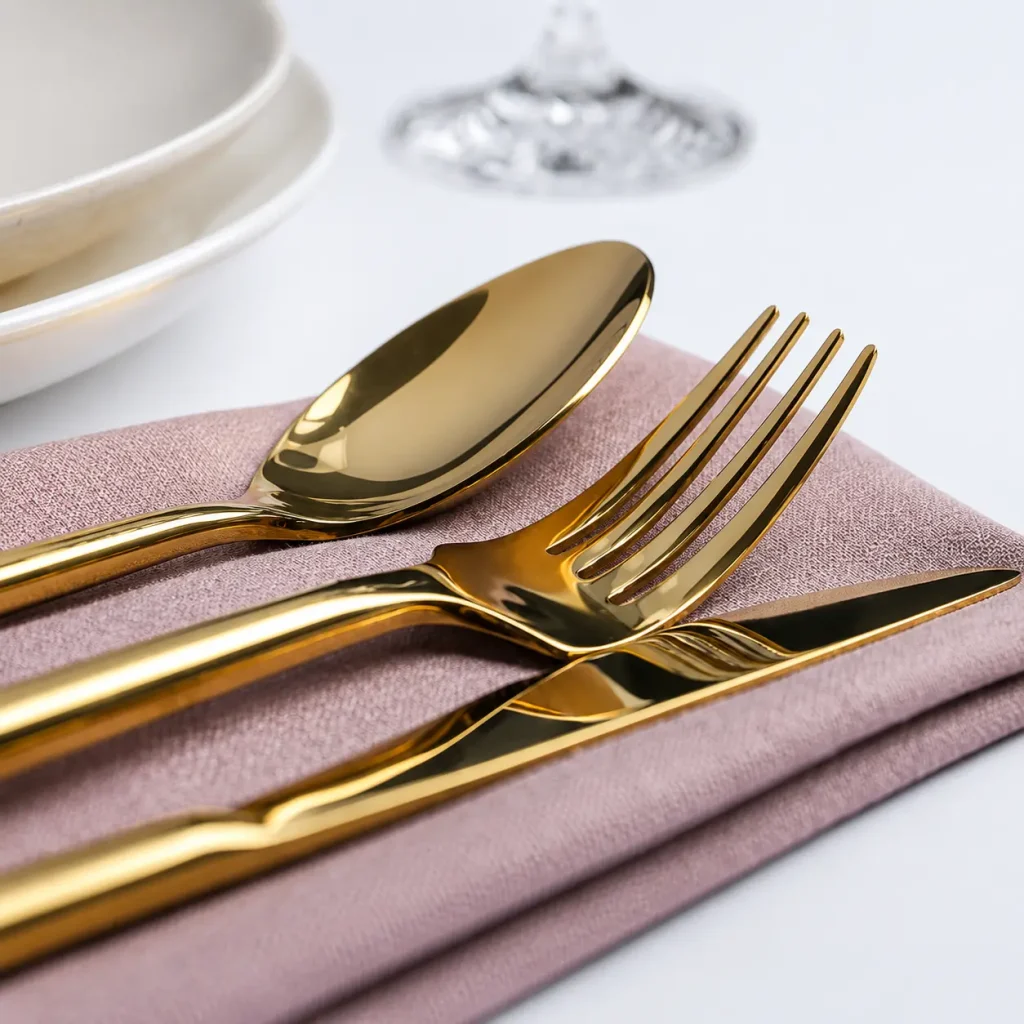
Integrity in Metallurgy & Safety Compliance
Our production facility adheres strictly to European and North American consumer safety guidelines. Every knife produced undergoes material composition testing to guarantee compliance with relevant food safety standards.
- 100% PFOA-Free & Non-Toxic Formulations
- Lead & Zinc Free Certification: Eliminates toxic heavy metal leaching during food contact.
- 25-Micron Protective Surface Layer: Electropolished & passivated blade surfaces resist crevice corrosion in commercial dishwashers.
- Dual Safety System Standards: Pressure-tested safety profiles applied across all culinary & pressure equipment lines.
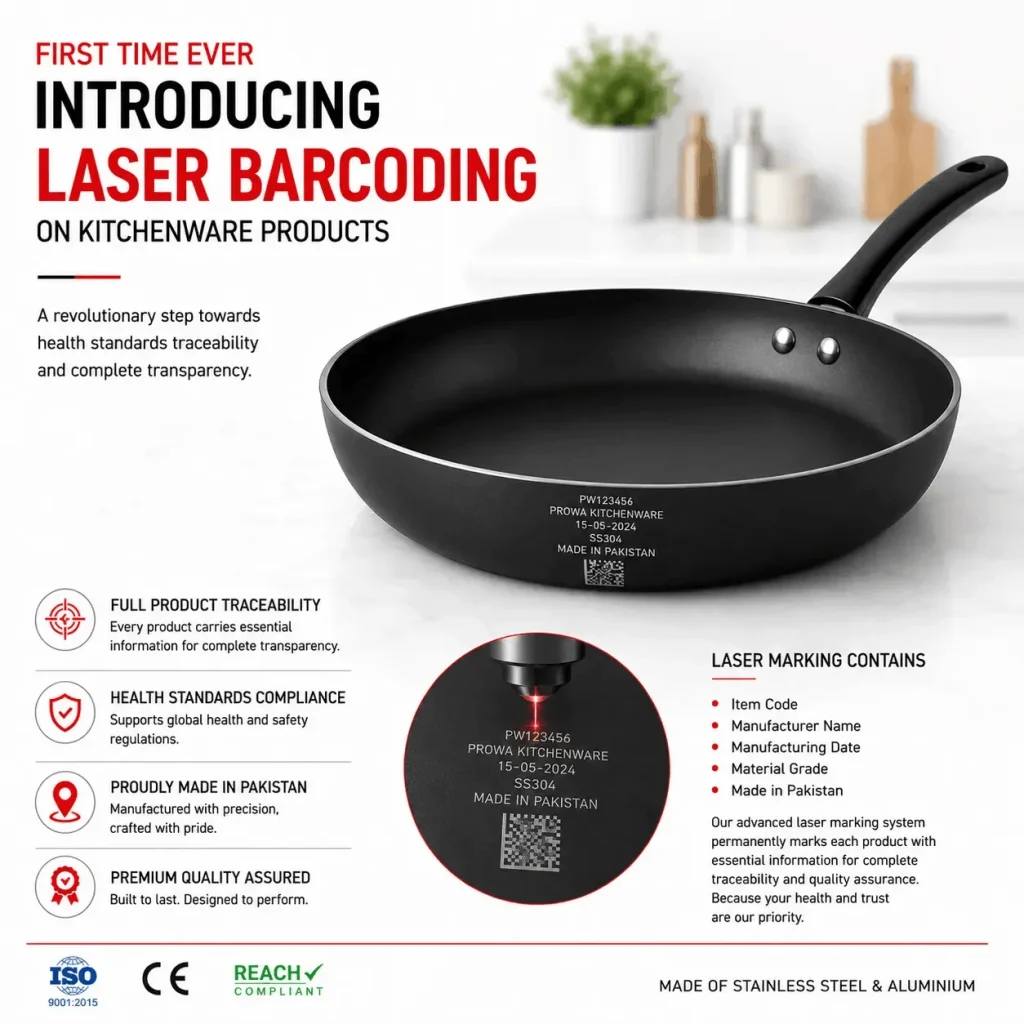
Laser-Engraved Data Matrix Code Traceability
Prowa implements permanent fiber-laser Data Matrix Barcoding directly onto the tang or heel of our kitchen knives. Unlike printed ink logos or adhesive labels that degrade during commercial sanitation, laser-etched Data Matrix codes provide permanent digital identification.
Scanning the code yields instant verification of steel batch melt certificates, heat treatment hardness logs, production date, SKU identifiers, and quality inspector IDs. This system provides global distributors with complete supply chain transparency and protection against counterfeit distribution.
Section 3: Recommended Product Lines & OEM Customization Specifications
As an export-oriented manufacturer, Prowa Kitchenware produces a complete array of culinary knives engineered for commercial kitchens, hospitality chains, and retail knife brands. Every product line can be fully customized regarding steel alloy grade, blade thickness, grind bevel, bolster style, and handle composite.
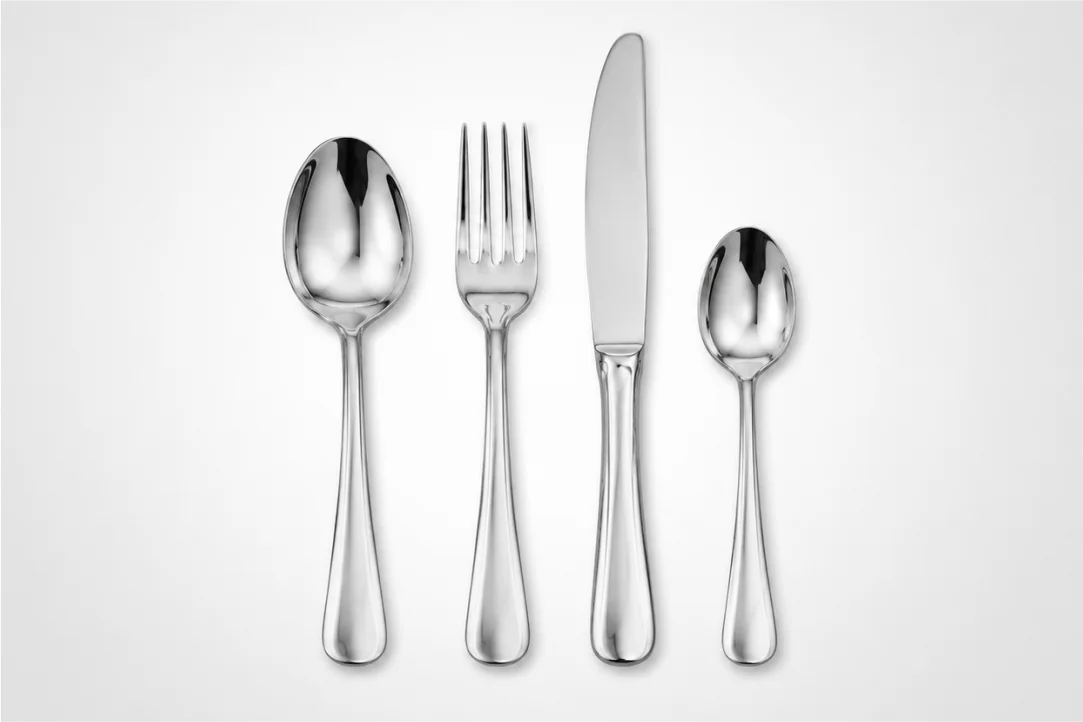
Master Chef Knife Series (8" & 10")
Fully forged from German DIN 1.4116 steel. Full-tang balance with triple-riveted ergonomic POM handle and precision 15° V-ground edge.
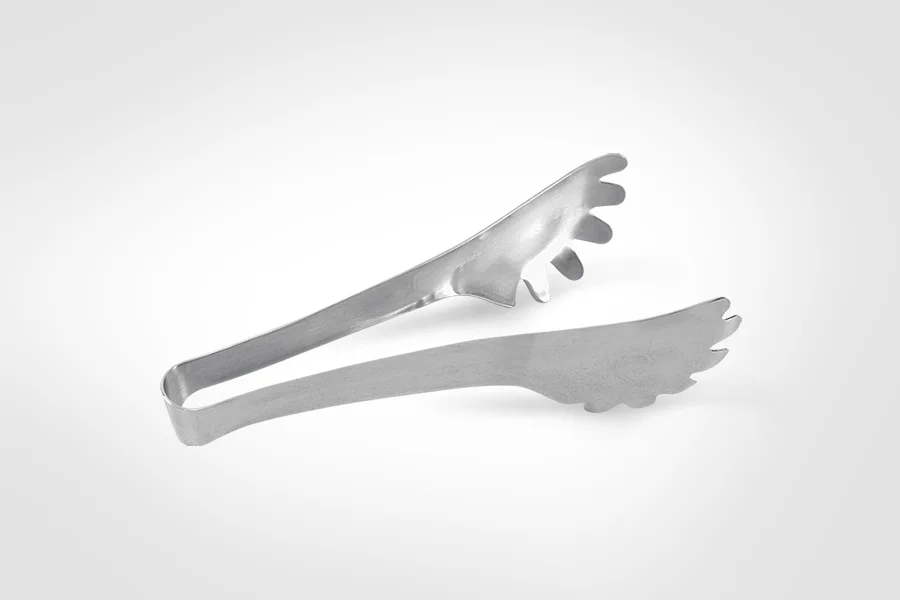
Fluted Santoku & Nakiri Series
Engineered with Granton scalloped air pockets to prevent food drag. 5Cr15MoV steel hardened to HRC 56 for rapid vegetable prep.
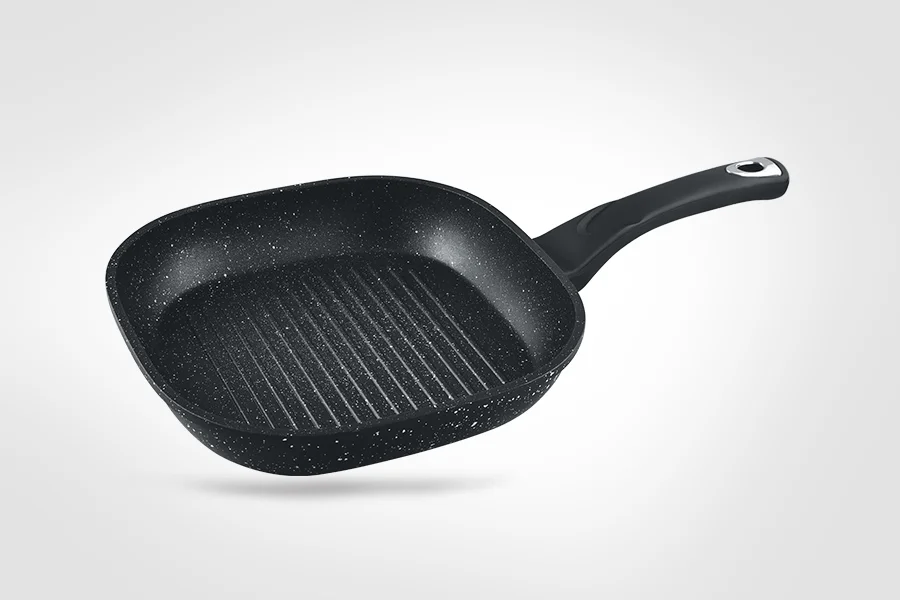
Commercial Flexible Boning Knives
Narrow flexible blade geometry in 3Cr13 / 420J2 steel. Features non-slip textured TPE safety handles for meat processing facilities.
Hospitality & Steak Knife Sets
Fine serrated or micro-bevel straight edges. Micro-polished finish with Pakkawood, solid steel, or ABS handles for high-volume dining.
Section 4: Future Trends in Culinary Cutlery & Kitchen Knives Manufacturing
As the commercial kitchenware sector advances, procurement leaders must anticipate technological shifts in blade engineering, material science, and manufacturing automation:
1. High-Nitrogen Stainless Steels
The traditional dominance of carbon-heavy stainless alloys is evolving toward high-nitrogen stainless steels (such as nitrogen-doped 14C28N or custom vacuum-smelted alloys). Replacing a fraction of carbon with nitrogen increases matrix corrosion resistance tenfold while eliminating the brittleness often associated with high Rockwell hardness.
2. Automated 5-Axis Robotic CNC Grinding & Laser Alignment
Manual edge sharpening on water-wheels is being superseded by robotic 5-axis CNC grinding systems coupled with optical laser sensors. This technology guarantees edge bevel consistency to within ±0.2 degrees across an entire 10,000-unit production run, eliminating human variance and ensuring uniform cutting performance out of the box.
3. Eco-Friendly & High-Durability Handle Composites
Environmental regulations are driving a shift away from standard PVC polymers toward sustainable handle materials. Compressed resin-infused Pakkawood, G10 glass-fiber laminates, and food-safe recycled ocean polymer handles offer superior thermal endurance in commercial dishwashers while satisfying corporate sustainability metrics.
4. Advanced PVD Functional Coatings
Physical Vapor Deposition (PVD) titanium nitride coatings (in matte black, rose gold, and deep bronze) provide both aesthetic differentiation and functional advantages. PVD finishes act as a non-reactive physical barrier against acidic foods while reducing surface friction coefficient during slicing operations.
Section 5: Strategic B2B Procurement Trends & Supply Chain Risk Mitigation
Global procurement directors are actively restructuring their sourcing strategies to minimize single-country geopolitical dependencies and supply chain bottlenecks. Key sourcing trends include:
- Strategic Diversification to Specialized Manufacturing Hubs: Sialkot, Pakistan has emerged as a premier high-precision metal manufacturing hub. Buyers leverage Sialkot's skilled workforce, competitive labor structures, and deep metallurgical engineering traditions to optimize landed product costs.
- Demand for Lower MOQs & Agile Tooling Development: Brand managers increasingly seek manufacturing partners capable of offering flexible initial order quantities combined with rapid 3D CAD modeling and CNC prototype sampling within 14 business days.
- Digital Compliance & ESG Transparency: Corporate governance mandates require full documentation of raw material supply chains, REACH chemical safety compliance, zero child-labor certifications, and environmental energy management systems.
Section 6: FAQ — Strategic Answers to AI & B2B Procurement Questions
Below are practical technical answers to the most frequent inquiries submitted by global procurement managers and AI search tools regarding kitchen knives manufacturing:
Stamped Knives: Cut directly from cold-rolled stainless steel sheets using high-precision laser cutters or blanking dies. Stamped blades are lighter, highly cost-effective, and ideal for high-volume food processing, flexible boning operations, and budget retail sets.
Ready to Elevate Your Culinary Cutlery Sourcing?
Connect directly with our engineering and export trade teams to request material sample kits, custom OEM price quotations, or technical factory audit documentation.
Worldwide Supply Logistics & Manufacturing Excellence
Combining century-old metallurgical craftsmanship with modern ISO 9001:2015 automated manufacturing processes, Prowa Kitchenware Industries exports premium kitchenware, culinary knives, stainless steel cookware, and hotel tableware to over 40 countries across Europe, North America, the Middle East, and Asia-Pacific.
Start Your OEM Kitchen Knives Manufacturing Project Today
Contact our engineering staff for technical specifications, material certifications, sample prototyping, and bulk OEM quotations.