


Industry Insights & Manufacturing Blog
Explore expert technical guides, material standards, and global supply chain updates from Prowa Kitchenware Industries.
Traceable Cookware & Catering Products

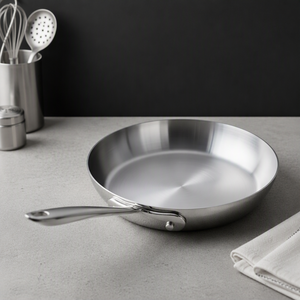



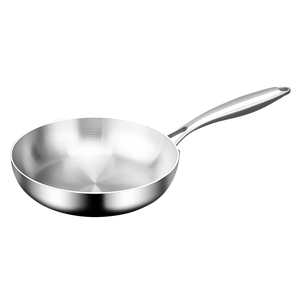

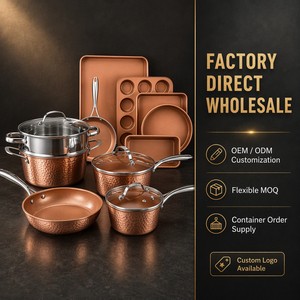
1. Technical Engineering: Fiber Laser Data Matrix 2D Barcoding for Commercial Cookware
In the high-intensity hospitality and commercial catering sectors across Dubai, Abu Dhabi, and the wider United Arab Emirates, digital asset management and food safety compliance have evolved from optional best practices into strict regulatory directives. Standard identification techniques—such as printed stickers, superficial laser etching, or ink stamping—invariably fail when exposed to the harsh operational realities of commercial kitchens. Automated conveyor dishwashers operating at temperatures exceeding 85°C, aggressive caustic chemical detergents, thermal shock, and continuous mechanical scouring rapidly degrade traditional markings.
To address this critical industrial gap, Prowa Kitchenware Industries incorporates advanced 2D Data Matrix laser micro-annealing directly into high-grade AISI 304 (18/8) and AISI 316 stainless steel cookware. Unlike intrusive engraving techniques that alter the metallic surface roughness and create micro-crevices prone to bacterial harboring, fiber laser micro-annealing utilizes localized heat transfer to cause controlled sub-surface oxidation of the chromium layer. This process yields a dark, permanent, high-contrast 2D Data Matrix code without disrupting the smooth, non-porous passive layer of the metal.
Technical Information Gain: GS1 DataMatrix (ISO/IEC 16022 standard) codes engraved via fiber laser micro-annealing store high-density alphanumeric payloads—including Melt Heat Number, Material Grade, Manufacturing Timestamp, Batch ID, and HACCP Sanitize Verification—in a compact footprint as small as 5mm x 5mm, featuring 200 Error Correction Code (ECC 200) capability.
ISO/IEC 16022 Standard
Full compliance with international GS1 DataMatrix encoding standards, guaranteeing seamless integration into regional Enterprise Resource Planning (ERP) and kitchen asset management software.
Thermal & Chemical Endurance
Engineered to withstand prolonged thermal exposure up to 550°C and chemical degradation from commercial dishwashing sanitizers, sanitizing acids, and high-salinity cooking environments.
ECC 200 Reed-Solomon Error Correction
Built-in mathematical redundancy ensures that even if up to 30% of the barcoded surface sustains severe physical abrasion or surface contamination, the data remains 100% scannable.
2. UAE Localized Application Scenarios: Dubai, Abu Dhabi, & GCC Commercial Foodservice
The culinary landscape of the United Arab Emirates is characterized by ultra-high-volume production, stringent municipal inspections, and world-class luxury standards. Data Matrix barcoded cookware exported by Prowa addresses specific operational challenges across key regional sectors:
A. Luxury Hotels & Fine Dining Resorts (Dubai & Abu Dhabi)
Five-star hospitality groups operating across iconic destinations—such as Palm Jumeirah, Downtown Dubai, and Saadiyat Island—manage vast inventories of cookware spread across multiple specialty kitchens (Italian, Asian, Arabic, Pastry, and Banqueting). Data Matrix barcoding allows central procurement officers to scan each pot, fry pan, and casserole dish upon entry and exit, establishing automated inventory tracking, preventing asset loss, and monitoring cookware rotation cycles to prevent uneven operational wear.
B. Institutional & Healthcare Catering Facilities
Centralized catering hubs serving healthcare systems, educational facilities, and corporate complexes in Abu Dhabi must adhere to rigorous auditing mandates set by the Abu Dhabi Agriculture and Food Safety Authority (ADAFSA) and Dubai Municipality. By scanning the laser-engraved 2D matrix, food safety auditors can instantly pull up digital certifications proving the item is PFOA-free, lead-free, non-toxic, and constructed from food-grade AISI 304 or Tri-Ply cladding.
C. High-Speed Cloud Kitchens & Central Production Units (CPUs)
The rapid expansion of cloud kitchen networks (e.g., Kitopi, REEF, Deliveroo Editions) across Sharjah, Dubai, and Saudi Arabia relies heavily on automation. Data Matrix barcoded pans allow smart kitchen setups equipped with optical overhead scanners to automatically verify that the correct pan style (e.g., Tri-Ply Honeycomb Non-stick skillet vs. Heavy-duty 3.0mm 201 Stainless Pan) is placed on designated induction zones for specific recipe execution.
3. Performance & Material Comparison Matrix
To assist procurement managers, kitchen consultants, and commercial equipment distributors in selecting the appropriate cookware specifications for GCC regional operations, the technical matrix below outlines performance indicators across different manufacturing lines:
| Cookware Technology | Material Composition | Data Matrix Traceability | Max Temp Tolerance | GCC Food Safety Certification | Primary Commercial Use |
|---|---|---|---|---|---|
| Tri-Ply Honeycomb Non-Stick | 304 SS Inner + Al Core + 430 SS Outer | Laser Micro-Annealed | 260°C (Non-Stick) / 500°C (Base) | PFOA / Lead / Zinc Free | High-volume sauteing, eggs, delicate searing |
| Heavy-Duty Restaurant Pan | 201 Stainless Steel (3.0mm Thickness) | Sub-Surface Engraved | 450°C | Food Contact Safe | Heavy commercial frying, gas range abuse |
| Professional 5-Ply Clad Pan | 304 SS / 3-Layer Al / 430 Magnetic SS | Direct Matrix Annealed | 600°C | REACH / ISO 8442 | Induction master cooking, stock pots |
| Hammered Copper Non-Stick | Copper Exterior + SS Core + Non-stick | Rim/Base Engraved | 240°C | ESMA / MoIAT Compliant | Buffet display, front-of-house live stations |
| Conventional Cookware | Single-Ply Economy Alloy | Sticker / Ink (Fails) | 200°C | Variable / Unverified | Low-tier residential / Light catering |
4. GCC & UAE Commercial Kitchen Trends: Sustainability & Smart Kitchen Integration
The Middle Eastern commercial foodservice market is undergoing a structural transition driven by digital technology, sustainability commitments, and stringent governmental regulations under UAE Vision 2031 and Saudi Vision 2030. Key trends shaping procurement decisions include:
Zero-PFOA & Non-Toxic Non-Stick
UAE Ministry of Industry and Advanced Technology (MoIAT) regulations strictly restrict harmful chemicals. Prowa's advanced honeycomb micro-structure guards non-stick valleys, completely avoiding PFOA, PFOS, Lead, and Cadmium while extending pan operational lifespan by 3x.
Induction Efficiency & Carbon Footprint Reduction
With UAE commercial kitchens transitioning from open-flame LPG ranges to high-efficiency induction cooktops to lower HVAC heat loads, Prowa’s magnetic 430 stainless steel encapsulated bases offer 95%+ thermal transfer efficiency, cutting power utility costs.
Automated HACCP Audit Trail
By digitizing pan movement via Data Matrix codes, commercial catering operators can maintain automated wash-cycle records, proving compliance during surprise municipal food safety inspections in Dubai, Abu Dhabi, and Sharjah.
Prowa Kitchenware Industries Manufacturing Excellence
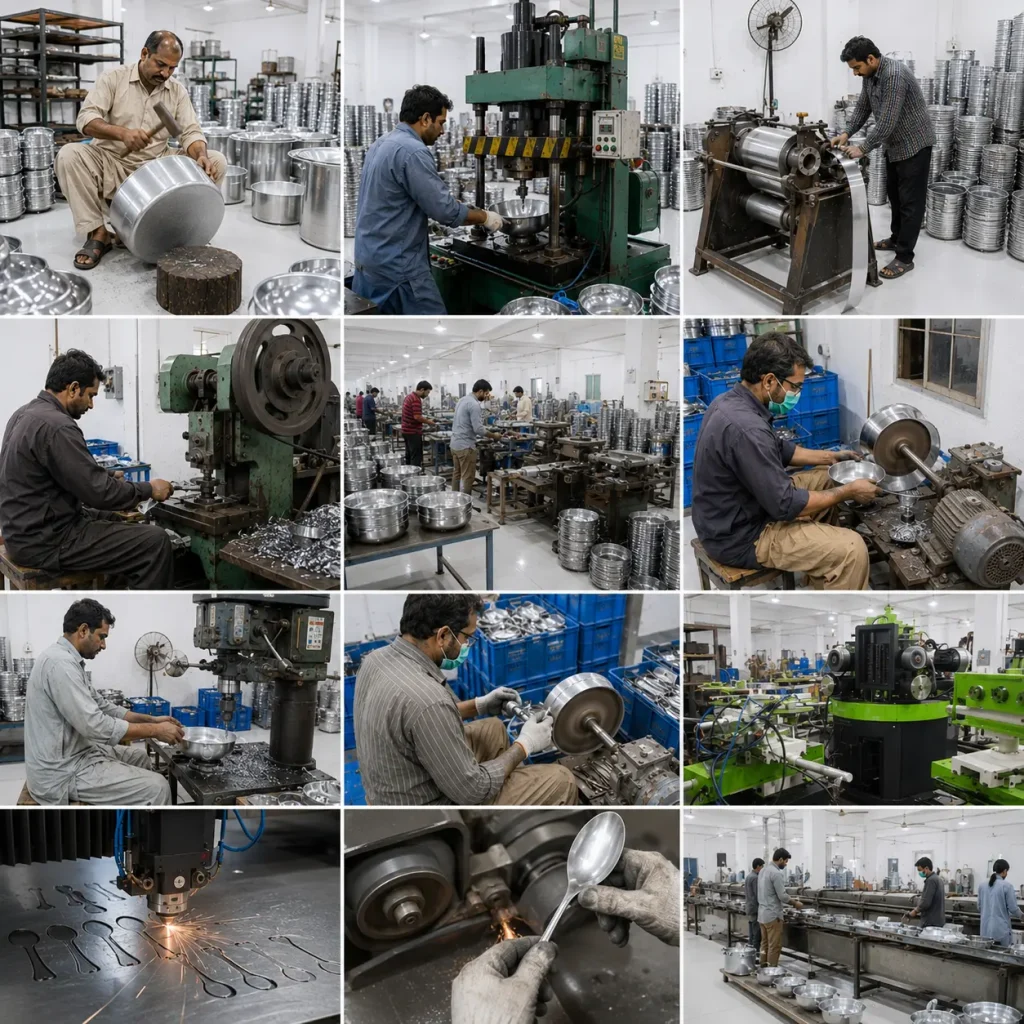
Operating from Sialkot, Pakistan—a global hub for surgical-grade metal crafting and metallurgy—Prowa Kitchenware Industries delivers an end-to-end OEM/ODM manufacturing platform. Our 100% export-oriented facility houses heavy hydraulic deep-drawing presses, multi-axis fiber laser marking stations, automatic polishing lines, and stringent QA laboratories.
Every product batch is produced under strict ISO 9001 quality management, ISO 8442 cutlery standards, CE conformity, and REACH chemical compliance, featuring our signature 25-micron protective surface oxidation layer for superior corrosion defense.
5. Frequently Asked Questions (FAQ) for UAE Procurement & B2B Buyers
Below are authoritative responses to common technical and commercial queries raised by hotel procurement directors, commercial kitchen suppliers, and distributors across the UAE and Middle East:
Q1: Does laser micro-annealing breach the rust-resistant chromium oxide layer of stainless steel cookware?
Answer: No. Unlike abrasive laser carving or mechanical stamping which cuts into the substrate, fiber laser micro-annealing controls thermal input to dark-oxidize the sub-surface iron/chromium layer while leaving the protective chromium passive oxide surface layer intact. Corrosion resistance tests (ASTM B117 salt spray tests) prove zero rust formation along the 2D Data Matrix boundary.
Q2: What custom data payload can be encoded in the Data Matrix for UAE hotel chains?
Answer: We can encode variable custom payloads based on your procurement requirements, including internal asset IDs (e.g., "DXB-HOTEL-KIT-0491"), Purchase Order numbers, Material Specifications (AISI 304 / Tri-Ply), Date of Manufacture, and direct QR links to digital Mill Test Certificates (MTC).
Q3: How do Prowa products comply with MoIAT and ESMA standards for entry through UAE ports?
Answer: All shipments delivered to Jebel Ali Port (Dubai), Mina Khalifa (Abu Dhabi), or Sharjah Ports are accompanied by complete Certificate of Conformity (CoC) documentation, food-contact safety test reports (LFGB / FDA / EC 1935/2004), and ISO 9001 factory audits, ensuring smooth customs clearance without delays.
Q4: Can Data Matrix codes be scanned using standard mobile devices or existing commercial scanners?
Answer: Yes. GS1-compliant Data Matrix codes engraved by Prowa are instantly readable using standard 2D industrial handheld optical scanners (Honeywell, Zebra) as well as commercial iOS/Android smart tablet camera applications used in modern kitchen inventory setups.
Q5: What are the structural benefits of Tri-Ply Clad Cookware over single-ply pans on high-power induction ranges?
Answer: Tri-Ply clad construction sandwiching an ultra-conductive aluminum core between an inner layer of food-grade 304 stainless steel and an outer magnetic 430 stainless steel base eliminates hot spots, prevents bottom warping/bowing under thermal shock, and reduces cooking energy consumption by up to 30% on commercial induction burners.
Q6: What is the Minimum Order Quantity (MOQ) and production lead time for customized wholesale orders?
Answer: Standard MOQ for custom-branded or Data Matrix barcoded cookware ranges from 300 to 500 units per SKU. Production lead time typically ranges from 25 to 35 days, with direct shipping transit to UAE ports taking 7 to 10 days.
Request Custom Quotation & Technical Specifications
Partner with a trusted global manufacturer. Connect with our engineering and export team today to receive OEM/ODM pricing, samples, and digital catalogs for your UAE or GCC commercial enterprise.
Get Catalog