


Industry Insights & Manufacturing Blog
Explore expert technical guides, material standards, and global supply chain updates from Prowa Kitchenware Industries.
Explore our export-certified commercial grade stainless steel drinkware, vacuum vessels, clad pans, and food-grade catering equipment manufactured under ISO 9001 and CE compliance standards.







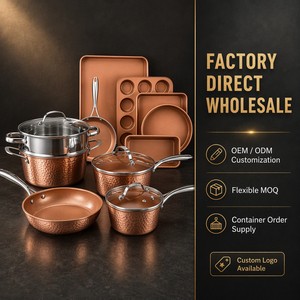
Executive Report: Sourcing Commercial Stainless Steel Drinkware & Vessels
The global market for commercial stainless steel drinkware, insulated thermoses, travel tumblers, and high-performance metal food containers has undergone a structural shift toward technical material specifications, environmental traceability, and strict regulatory compliance. Institutional buyers, brand owners, hospitality procurement executives, and corporate supply chain directors no longer evaluate suppliers solely on unit pricing. Instead, global B2B procurement strategies are driven by metallurgical purity, vacuum insulation integrity, multi-ply cladding technology, and automated manufacturing compliance.
In high-intensity commercial environments—such as hotel banqueting, institutional food service, corporate catering, and outdoor retail brands—stainless steel drinkware and liquid storage systems face rigorous thermal shocks, mechanical impacts, and chemical exposure from commercial dishwashers. Selecting a top-tier manufacturer requires an in-depth understanding of austenitic stainless steel alloys, passivation techniques, copper vacuum insulation linings, and automated quality assurance protocols.
Key Procurement Takeaway: Sourcing commercial-grade stainless steel drinkware requires verifying material mill test certificates (MTC) to guarantee that vessels utilize genuine AISI 304 (18/8) or AISI 316 (18/10) austenitic alloys, avoiding low-nickel series alloys that suffer from premature intergranular corrosion under dishwashing stresses.
Metallurgical Comparison: AISI 304 vs. AISI 316 vs. 201 Series Alloys
Stainless steel derives its corrosion-resistant qualities from chromium, which reacts with oxygen to form a self-healing chromium oxide surface film (passivation layer). In drinkware and food container manufacturing, the ratio of Chromium and Nickel determines the alloy's structural stability and resistance to acidic beverage leaching.
| Alloy Grade | Composition (Cr / Ni / Mo) | Corrosion Resistance | Thermal Stability | Recommended Commercial Application |
|---|---|---|---|---|
| AISI 304 (18/8) | 18% Cr, 8% Ni | Excellent (pH 3.0 to 10.0) | Up to 870°C | Standard Commercial Drinkware, Vacuum Tumblers, Water Bottles |
| AISI 316 (18/10+Mo) | 16-18% Cr, 10-14% Ni, 2-3% Mo | Superior (Pitting & Chloride Safe) | Up to 925°C | Medical Grade Flasks, Saline/Acidic Liquid Transport, Marine Use |
| AISI 201 Series | 16-18% Cr, 0.5-3.5% Ni, High Mn | Moderate (Prone to Acidic Pitting) | Up to 650°C | Low-Cost Outer Shells Only; Not Recommended for Food Contact Liners |
| Tri-Ply Clad Composite | 304 Interior / Alum Core / 430 Base | High Structural Integrity | Rapid Distribution | Multi-Functional Thermal Cookware & Heated Beverage Servers |
Engineering Excellence in Insulated Drinkware Manufacturing
Modern double-wall vacuum insulated drinkware relies on advanced physics and mechanical engineering to suppress heat transfer through conduction, convection, and radiation. Leading manufacturers utilize high-vacuum evacuation chambers operating at pressures below 10-4 Pa, effectively eliminating gas molecules between the inner and outer metal walls.
Dual-Wall Vacuum Isolation
Removes molecular air mass between walls to achieve zero conductive heat transfer. Maintains hot liquid temperatures (>65°C) for up to 12 hours and cold temperatures (<8°C) for 24 hours.
Copper Coated Radiation Barrier
An ultra-thin copper plating layer is applied electrostatically to the outer surface of the inner liner. This metallic layer reflects infrared thermal radiation back into the beverage chamber.
Laser Sealing Technology
Replaces traditional lead-solder vacuum sealing with automated glass micro-bead laser welding, ensuring 100% toxic-lead-free construction and robust seal longevity.
Surface Finishing & Physical Vapor Deposition (PVD) Coating
For high-end commercial customization, top suppliers employ physical vapor deposition (PVD) titanium plating and electrostatic powder coating. PVD coating deposits ultra-hard metallic titanium layers that bond at an atomic level to the stainless steel substrate. This offers scratch resistance up to 2500 HV (Vickers hardness), preventing color flaking during commercial high-temperature dishwashing cycles. Furthermore, exterior powder coating provides an ergonomic tactile grip while exhibiting high resistance to salt-spray oxidation.
Corporate Capability Benchmark: Prowa Kitchenware Industries
Referencing established industrial leaders such as Prowa Kitchenware Industries (headquartered in the engineering hub of Sialkot, Pakistan), modern kitchenware and drinkware production demands full backward integration. Operating a 100% export-oriented production footprint, certified enterprise suppliers combine deep metallurgical mastery with automated press-forming lines, laser welding, and digital quality control systems.
Data Matrix Laser Barcoding
Industry-first digital identity integration. Every unit is laser-marked with a permanent 2D Data Matrix code encoding material batch, alloy grade, production timestamp, and QC inspector ID for complete global supply chain transparency.
Certified Food Safety & Non-Toxic Guarantee
Full compliance with EU REACH regulations, FDA food contact protocols, and CE certifications. Products are guaranteed 100% PFOA-free, Lead-free, Cadmium-free, and Zinc-free.
Multi-Stage Quality Control & Safety Valves
From raw material spectrographic testing (ISO 15510) to hydraulic pressure venting systems (calibrated to 12 PSI safety thresholds for pressure-sealed vessels), every product undergoes strict physical verification.
Sustainable Metallurgy & Low-Carbon Footprint
Advanced scrap-recycling and metal-recovery systems save over 180 metric tons of virgin alloy annually, offering corporate clients verifiable ESG metric documentation for carbon-neutral procurement goals.
Global Procurement Trends: Sourcing Stainless Steel Drinkware (2025–2030)
As global sustainability mandates tighten across North America, the European Union, and Asia-Pacific, corporate buyers are restructuring their procurement frameworks. Key procurement trends shaping the next decade include:
1. Circular Economy Mandates & Recycled Alloy Integration
Leading brand owners are requiring suppliers to incorporate certified post-consumer recycled (PCR) stainless steel (ranging from 50% to 90% recycled content). Utilizing recycled AISI 304 steel reduces manufacturing energy consumption by up to 70% and water consumption by 60% without compromising tensile strength or corrosion resistance. ISO 14021 recycled material validation is fast becoming a mandatory requirement in supplier RFQs.
2. Digital Product Passports (DPP) & Blockchain Traceability
Driven by European Union regulations, drinkware products must soon carry accessible digital passports. By utilizing high-density laser-etched Data Matrix codes on vessel bases, enterprise suppliers allow consumers and auditors to scan products with smart devices to instantly verify carbon footprint calculations, factory audit records, and raw material origins.
3. Smart IoT Insulation & UV-C Sanitizing Drinkware
The commercial drinkware sector is rapidly expanding into tech-integrated hardware. High-end lines feature low-power OLED caps with real-time temperature sensors and built-in 265nm UV-C LED sterilization modules that eliminate 99.99% of waterborne micro-organisms. B2B suppliers with internal electro-mechanical integration capabilities offer significant competitive advantages.
4. Elimination of PFAS, Lead, and Micro-Plastics
Regulatory bans on per- and polyfluoroalkyl substances (PFAS) are pushing buyers toward pure stainless steel liners, food-grade silicone seals, and BPA-free Tritan lids. Laser-welded sealing technologies eliminate all lead-containing vacuum seal plugs, ensuring complete regulatory compliance in stringent global import zones.
Factory Audit & Supplier Vetting Checklist for B2B Buyers
To mitigate quality failures, shipment delays, and legal liabilities, procurement teams must enforce a systematic factory evaluation process prior to issuing purchase orders (POs):
| Audit Phase | Key Verification Checklist Items | Acceptance Criteria |
|---|---|---|
| 1. Raw Material Audit | X-Ray Fluorescence (XRF) Spectrometer analysis of steel coils & blanks. | Confirmed Chromium >18.0%, Nickel >8.0% (AISI 304 standard compliance). |
| 2. Vacuum Testing | 100% online thermal retention testing in infrared heat tunnels. | Zero temp variance across outer shell after 60 seconds exposure to hot chamber. |
| 3. Coating Adhesion | ASTM D3359 Cross-Hatch Tape Adhesion Test & 48-Hour Salt Spray Testing. | Class 4B/5B adhesion rating; zero blistering or rust pitting. |
| 4. Leak Proofing | Negative pressure vacuum chamber immersion test on finished lids. | Zero micro-bubble leakage under -0.08 MPa pressure differential. |
| 5. Compliance Documents | Review of third-party audit reports (SGS, TUV, Intertek). | Current ISO 9001, ISO 8442, REACH, FDA, and CE certification compliance. |
Frequently Asked Questions (FAQ) for Commercial Procurement
Ready to Elevate Your Commercial Drinkware Portfolio?
Partner with a trusted, certified stainless steel manufacturer. Request custom OEM/ODM technical specifications, factory audit data, and wholesale quotation packages today.