


Industry Insights & Manufacturing Blog
Explore expert technical guides, material standards, and global supply chain updates from Prowa Kitchenware Industries.
Featured Die Cast & High-Performance Cookware Solutions
Explore premier OEM/ODM product lines engineered for heavy-duty commercial kitchens, luxury retail brands, and international hospitality chains. Certified compliant with ISO 9001, CE, LFGB, and FDA standards.

Induction Non-Stick Triply Honeycomb Skillet & Casserole Pot
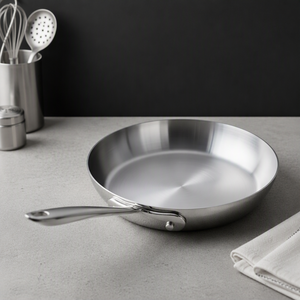
Commercial Wholesale 3.0mm Heavy Duty Stainless Steel & Aluminum Pot

Professional 3-Layer Tri-Ply Clad Nonstick Honeycomb Cooking Pot

Multi-Ply Clad OEM Casserole Pots & Kitchenware Set

Customized 22CM 18/8 Die-Formed Casserole Pan with Tempered Glass Lid
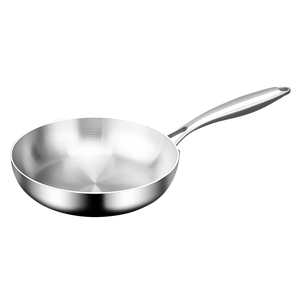
Eco-Friendly Five-Ply Clad Nonstick Casserole Pot

Modern Laser Etched Nonstick Honeycomb Die-Cast Casserole
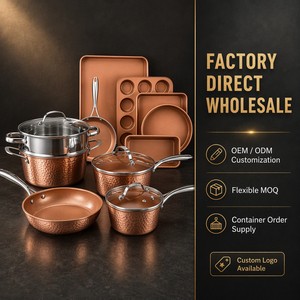
Luxury Hammered Finish Die-Cast Nonstick Casserole & Stockpot Set
The Technical Evolution of Die-Cast Aluminum Casserole Pots
In the global commercial cookware industry, Die Cast Aluminum Casserole Pots represent the pinnacle of thermal efficiency, structural integrity, and architectural flexibility. Unlike conventional stamped or forged cookware, die-casting involves injecting molten aluminum alloy (typically ADC12 or A380 standard grade aluminum) into high-precision steel molds under extreme pressure (often exceeding 400 to 1,000 tons of clamping force).
This high-pressure die-casting (HPDC) methodology eliminates microscopic air pockets, internal voids, and grain boundaries that frequently plague budget cookware. The result is a monolithic metal body characterized by exceptional wall-to-base thickness variation capabilities. Premium casserole pots feature extra-thick bases (ranging from 4.5mm to 7.0mm) paired with tapered sidewalls (2.5mm to 3.5mm), optimizing heat retention while drastically reducing unnecessary total weight.
Integral Molded Side Handles
Die-casting allows handles to be molded as an organic extension of the main pot body. Eliminating rivets or spot-welded joints eliminates food accumulation zones, vastly improving commercial hygiene and structural failure resistance.
Multi-Layer Plasma Non-Stick Core
Modern die-cast casserole pots utilize multi-tier fluoropolymer or ceramic matrices reinforced with titanium particles, diamond dust, or granite flakes. Applied via automated electrostatic spray guns and sintered at 420°C.
Full Disk Induction Impact Bonding
To bridge compatibility with induction cooktops, manufacturers friction-weld or cold-press an AISI 430 magnetic stainless steel base plate onto the die-cast aluminum bottom, ensuring 100% electromagnetic coupling efficiency.
Manufacturing Benchmark: Die-Cast vs. Forged vs. Stamped Aluminum Casserole Pots
When evaluating OEM/ODM vendors for large-scale procurement, understanding the mechanical performance profile of various aluminum forming techniques is crucial for brand positioning and minimizing defect rates.
| Evaluation Parameter | Die-Cast Aluminum (HPDC) | Forged Aluminum | Stamped Sheet Aluminum |
|---|---|---|---|
| Base-to-Wall Ratio | Variable (e.g. 6.0mm / 3.0mm) | Semi-Variable (3.5mm / 2.5mm) | Uniform Thickness (1.8mm to 2.5mm) |
| Structural Rigidity & Anti-Warping | Exceptional (High Tensile Resistance) | Moderate to High | Low (Prone to Thermal Distortion) |
| Thermal Retention (Heat Capacity) | High (Optimal for Simmering) | Moderate | Low (Fast Heat Loss) |
| Handle Integration | Seamless Monolithic Casting | Riveted / Welded Only | Riveted / Spot-Welded Only |
| Tooling & Mold Initial Cost | High ($8,000 - $25,000) | Medium ($3,000 - $8,000) | Low ($1,000 - $3,000) |
| B2B Target Segment | Commercial Hospitality / Premium Retail | Mid-Tier Supermarket Brands | Budget Mass Retail / Promotional |
Top 10 Die Cast Aluminum Casserole Pots Factories & Suppliers
An analytical breakdown of leading global manufacturing hubs and specialized supply partners driving innovation in non-stick casserole pot production.
1. Prowa Kitchenware Industries (Sialkot, Pakistan)
Specialization: Premium Die-Cast Aluminum, Tri-Ply Stainless Steel & Custom Private Label OEM Manufacturing.
Operating from the world-renowned industrial metalworking hub of Sialkot, Pakistan, Prowa Kitchenware Industries has established itself as an export-exclusive powerhouse. Utilizing state-of-the-art German and Italian automated die-casting machinery, Prowa integrates vertical processing under one roof—from raw alloy melting to 25-micron protective coating application and laser data matrix barcoding.
Key Strengths: CE, ISO 9001, ISO 8442, ISO 4957, and ISO 15510 certified; 100% PFOA-, Lead-, and Cadmium-free coatings; integrated 12 PSI safety pressure valves; 100% export orientation with a 98% client retention rate across North America, Europe, and the Middle East.
2. Yongkang Industrial OEM Giants (Zhejiang, China)
Specialization: Mass-Scale HPDC Aluminum & Multi-Layer Granite Coating.
Yongkang and Wuyi clusters in Zhejiang Province house some of the highest-capacity die-casting facilities globally. Specialized in rapid prototyping and mega-volume production runs exceeding 500,000 units per month.
Buyer Takeaway: Ideal for retail chains seeking competitive volume pricing, standardized BSCI audits, and expansive catalog die options.
3. Guangdong Precision Cookware Group (Foshan, China)
Specialization: Honeycomb Laser-Etched & Induction-Bonded Casseroles.
Foshan-based manufacturers lead in high-end surface treatments, combining die-cast aluminum cores with stainless steel honeycomb matrixes that allow safe usage of metal utensils.
Buyer Takeaway: Outstanding engineering for hybrid cookware lines catering to culinary enthusiasts and commercial kitchens.
4. Italian Culinary Artisans (Brescia / Lombardy Hub)
Specialization: European Designer Casseroles & Organic Ceramic Coatings.
Italian suppliers excel in aesthetic design, ergonomic silicone-touch handles, and eco-certified mineral coatings (sol-gel ceramic technology). Focus is heavily weighted toward high-end retail brands.
Buyer Takeaway: Higher unit cost compensated by premium brand equity, EU compliance, and fashion-forward color palettes.
5. Turkish Aluminum & Metalwork Specialists (Kahramanmaraş)
Specialization: Heavy-Gauge Die Cast Stockpots & Granit-Coated Casseroles.
Turkey serves as a primary supply bridge between Europe and the Middle East, offering robust die-cast casserole pots with thick walls and custom die-cast glass lid rims.
Buyer Takeaway: Favorable transit times to Europe and MENA regions under Euro-1 tax preferences.
6. South Korean Ceramic-Coated Die Cast Manufacturers
Specialization: Ecoramic & PFTE-Free Sol-Gel Technologies.
South Korea leads the world in advanced sol-gel ceramic non-stick formulations. Their die-cast casserole pots feature vibrant pastel exteriors and glass-like interior slip finishes.
Buyer Takeaway: Excellent choice for health-conscious consumer markets demanding 0% fluoropolymer marketing claims.
7. German Engineering Cookware Partners
Specialization: Heavy Commercial Die-Cast & Plasma Sintered Titanium Coating.
German producers focus on indestructible commercial-grade casserole pots. Molds incorporate thermal storage bases up to 9mm thick for professional kitchen abuse.
Buyer Takeaway: Top-tier durability and TÜV GS safety certifications for heavy-duty gastronomy suppliers.
8. Haryana & Maharashtra Die-Casting Hubs (India)
Specialization: Hard-Anodized & Die-Cast Hybrid Casseroles.
Rapidly growing manufacturing base offering dual hard-anodized and non-stick internal die-cast options for diverse global food preparation requirements.
Buyer Takeaway: Competitive labor cost structure for large-volume contractual orders.
9. Caxias do Sul Industrial Group (Brazil)
Specialization: Large-Capacity Commercial Casserole Pots.
Latin America's premier cookware hub, producing heavy-duty aluminum cookware supplying the Americas with robust freight routes.
Buyer Takeaway: Strategic geographical advantages for North and South American distribution logistics.
10. Binh Duong Industrial Zone Factories (Vietnam)
Specialization: Tariff-Optimized OEM Die-Casting & Export Assembly.
Modern facilities established to provide tariff-free access into the US market under specific trade agreements, specializing in complete boxed cookware sets.
Buyer Takeaway: Tariff mitigation for US-based importers requiring compliant country-of-origin documentation.
Corporate Engineering Advantages: The Prowa Standards
To maintain a competitive edge in international procurement, Prowa Kitchenware Industries integrates cutting-edge metallurgical controls and proprietary manufacturing technologies into every die-cast casserole pot produced.
Data Matrix Laser Traceability
Industry-first laser engraving of unique 2D Data Matrix codes directly onto the aluminum bottom rim. Stores alloy batch numbers, production dates, and quality inspection logs—enabling 100% digital supply chain transparency.
25-Micron Protective Layer
Application of an invisible 25-micron surface sealing layer preventing aluminum ion migration and safeguarding cookware against corrosion from acidic foods (tomato sauces, vinegars, citrus braises).
12 PSI Pressure Safety System
For high-capacity thermal casserole pots equipped with locking covers, Prowa integrates a dual-safety 12 PSI pressure relief valve mechanism engineered according to strict CE safety guidelines.
Strategic Sourcing Projections: Global Cookware Trends 2025–2030
Procurement directors and B2B buyers must align their supply chains with evolving global consumer expectations and strict environmental regulations. Over the next five years, four critical trends will define the die-cast aluminum casserole pot market:
- Total Phase-Out of Fluoropolymers (PFAS / PFOA Legislation): European REACH regulations and US state-level bans (e.g., Maine, Minnesota) are forcing brands to transition to 100% PFAS-free ceramic coatings or mechanical non-stick surfaces (such as laser-etched honeycomb matrices).
- Circular Economy & Recycled Aluminum Ingot Sourcing: Top-tier factories are shifting to 100% post-consumer recycled aluminum alloys (saving up to 95% of energy compared to primary smelting). Prowa already saves 180 Tons of metal annually through closed-loop recycling.
- Universal High-Speed Induction Efficiency: With induction cooktop adoption surging globally, die-cast casseroles must feature full-coverage spray-formed magnetic bottom coatings rather than traditional stamped mesh plates.
- Smart Packaging & Flat-Pack Modular Knobs: To optimize ocean freight container loading rates, innovative factories are supplying toolless detachable handles and nestable pot geometries, increasing units-per-40ft-HQ container by up to 35%.
B2B Sourcing & Technical Procurement FAQ
Essential answers for importers, brand procurement managers, and commercial distributors evaluating die-cast aluminum casserole pot manufacturing.
What is the standard Minimum Order Quantity (MOQ) for OEM die-cast pots?
For standard catalog items, MOQ typically starts at 1,000 units per size/color. For fully customized private label molds requiring unique die creation, MOQs generally range from 2,000 to 3,000 sets depending on pot diameter and coating specification.
How do die-cast casserole pots pass international food contact regulations?
Factories undergo rigorous chemical migration testing under EU Regulation (EC) No 1935/2004, German LFGB, and US FDA 21 CFR standards. Coatings are verified free of PFOA, PFOS, Lead, Cadmium, and heavy metal extractables via independent labs (SGS, TUV, Intertek).
What is the typical lead time for custom tooling and mass production?
Mold design, 3D printing validation, and steel tooling fabrication require approximately 30 to 45 days. Once pre-production samples are approved, mass production runs take 35 to 45 days, depending on factory loading and custom packaging requirements.
Why is die-cast aluminum superior to cast iron for commercial casseroles?
Die-cast aluminum offers equivalent or superior thermal distribution at one-third the weight of traditional enameled cast iron. This drastically lowers international ocean freight shipping costs and reduces physical fatigue for commercial kitchen staff.
How is non-stick coating adhesion tested during quality control (QC)?
Quality control labs perform Cross-Hatch Tape Adhesion Tests (BS EN 12983-1), Salt Spray Corrosion Tests (over 72 hours), and Heavy Metal Scouring Pad Abrasion Tests (20,000 to 50,000 continuous cycles under 1.5kg load) to verify zero peeling.
What customization options are available for private label brands?
Full customization covers interior coating color/texture (granite, marble, ceramic, honeycomb etches), exterior heat-resistant lacquer colors, custom laser-engraved bottom logos, bespoke handle materials (bakelite, soft-touch silicone, cast steel), and retail color boxes.