


Industry Insights & Manufacturing Blog
Explore expert technical guides, material standards, and global supply chain updates from Prowa Kitchenware Industries.
High-Performance Commercial & Retail Tri-Ply Cookware

Manufacturer Wholesale Induction Non Stick Skillet Triply Stainless Steel Honeycomb Cookware Fry Pan Nonstick Frying Pans
Inquire Now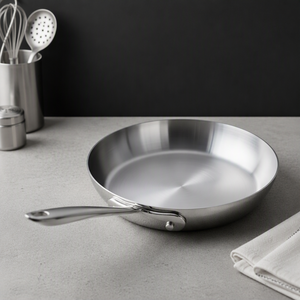
Wholesale 201 Stainless Steel Pan Stainless Pans Steel Frying Pan 3.0mm Thickness for Restaurant Use
Inquire Now
Professional 3 Layers Cooking Pot Skillet Frying Pan 304 Tri Ply Stainless Steel Cookware Nonstick Honeycomb Fry Pan
Inquire Now
TIANXING Multi Ply Stainless Steel Cookware Set Professional Tri Ply Clad Pots and Pans Induction Safe Wholesale Kitchenware OEM
Inquire Now
Customize Tri-Ply Frying Pan 22CM 18/8 304 Stainless Steel Pan With Lid Induction Cooking Pan Kitchen Frying Pan
Inquire Now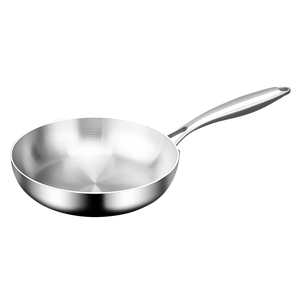
Eco-friendly Five-Ply Clad 304 Stainless Steel 8 Inch Frying Pan Silver Wholesale Food Contact Nonstick Glass Cover Kitchen
Inquire Now
Modern Nonstick Stainless Steel Fry Pan Round Honeycomb Design For Kitchen Cooking Pans And Cookware
Inquire Now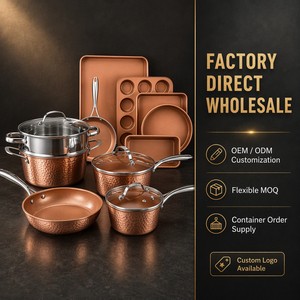
Hammered Copper Nonstick Cookware Set Glass Lids Stainless Steel Handle Bakeware Frying Pan Stockpot Induction OEM ODM Wholesale
Inquire Now1. The Metallurgy of Excellence: Tri-Ply Clad Cookware Architecture
In the global culinary manufacturing ecosystem, Tri-Ply Stainless Steel Cookware represents the pinnacle of thermal efficiency, structural integrity, and hygienic food contact safety. Procurement directors, brand managers, and commercial importers evaluating Chinese manufacturing hubs must understand the technical micro-architecture that distinguishes enterprise-grade multi-ply vessels from low-tier encapsulated impact-bonded alternatives.
Tri-ply clad material is created through an intense high-pressure roll-bonding metallurgical process. Unlike traditional encapsulated base cookware—where an aluminum disk is merely brazed to the bottom of a single-sheet stainless pot—tri-ply cladding unifies three distinct metallic alloys across the entire body of the vessel, from base to lip:
Interior Layer: SUS304 (18/8 or 18/10)
Austenitic stainless steel engineered for non-reactive food contact. Offers extreme resistance to organic acids, salt corrosion, and structural pitting, guaranteeing 100% PFOA, Lead, and Zinc-free culinary safety under high heat.
Core Element: Pure Aluminum (1050/3003)
An encapsulated high-purity aluminum core providing ultra-rapid thermal conductivity (~225 W/m·K). Eliminates localized hotspots, distributing heat laterally across sidewalls with unprecedented thermal consistency.
Exterior Base: SUS430 (18/0 Ferritic)
Highly magnetic stainless steel optimized for maximum induction energy conversion. Compatible with commercial induction ranges, gas flames, ceramic glass, and electric radiant stovetops.
By leveraging Chinese manufacturing expertise in cold-roll bonding and precision deep-drawing, top-tier exporters deliver seamless tri-ply cookware that resists thermal warping up to 500°C (932°F). This structural stability prevents pan dish-out (convex warping), ensuring flat contact with induction cooktops for maximum electrical efficiency.
2. Structural Comparative Matrix: Tri-Ply vs. 5-Ply vs. Impact-Bonded
When executing bulk procurement orders for OEM private labels or commercial hotel supply chains, choosing the correct material specification dictates total cost of ownership (TCO), freight payload efficiency, and product longevity. Below is an engineering comparison matrix developed for international buyers:
| Performance Specification | Tri-Ply Fully Clad (3-Layer) | 5-Ply Premium Clad (5-Layer) | Impact-Bonded Capsule Base |
|---|---|---|---|
| Layer Composition | SUS304 + Al 1050 + SUS430 | SUS304 + Al + Al Alloy + Al + SUS430 | Single SS Body + Encapsulated Disc |
| Wall Heat Transfer Ratio | 100% Uniform (Base-to-Rim) | 100% High Thermal Mass | 15-25% (Heat localized at base) |
| Average Gauge Thickness | 2.2mm – 3.0mm | 3.0mm – 4.5mm | 0.6mm Body / 4.0mm Base |
| Warp Resistance Threshold | High (Up to 450°C) | Ultra-High (Up to 550°C) | Moderate (Disc separation risk) |
| Production Lead Time (OEM) | 30 – 40 Days | 35 – 45 Days | 20 – 30 Days |
| Ideal Commercial Market | Retail Brands, HORECA, Mid-High OEM | Luxury Cookware, Professional Chefs | Budget Retail, Mass Supermarkets |
3. Chinese Export Advantages & Advanced Manufacturing Capabilities
China's leading tri-ply cookware factories have evolved far beyond basic assembly. Integrating advanced metallurgy labs, automated robotic polishing, and digital tracking technologies, premier exporters provide unmatched strategic value to international distributors.
Laser-Etched Micro-Honeycomb Tech
Pioneering dual-surface engineering combining non-stick release with stainless steel durability. Raised stainless steel ridges protect the underlying non-stick coating from metal utensil abrasion.
Data Matrix Product Serialization
Adopting laser-engraved 2D Data Matrix barcodes directly onto metal surfaces. Stores batch codes, material certifications, quality control timestamps, and SKU data for complete supply chain transparency.
Rigorous International Compliance
Fully compliant with global food contact regulations including EU REACH, FDA, DGCCRF (France), LFGB (Germany), and ISO 8442 standardizations for cutlery and hollowware safety.
Furthermore, premier manufacturing facilities utilize 25-micron invisible protective surface layers during deep drawing, preserving raw metal grain and preventing micro-fractures during heavy hydropress forming. Combined with dual-safety pressure relief valves for pressure cookers and cast stainless handles welded to withstand over 150 kg of shear stress, Chinese tri-ply exporters set global benchmarks in product stability.
4. Future B2B Procurement Trends (2025–2030)
The global cookware import ecosystem is undergoing a structural shift driven by legislative changes, consumer health awareness, and raw material volatility. B2B buyers sourcing from China must align their purchasing strategies with these critical market trends:
A. Phase-Out of Traditional PFAS/PTFE Non-Stick Coatings
With aggressive legislative bans on "forever chemicals" (PFAS, PFOA, GenX) sweeping across the European Union and North America, international importers are transitioning toward Tri-Ply Hybrid Honeycomb and Sol-Gel Ceramic coatings. Hybrid tri-ply pans utilize micro-engraved physical stainless barriers that dramatically extend coating lifespan while maintaining total chemical safety compliance.
B. Lightweight Multi-Ply Engineering
While heavy commercial cookware remains vital for HORECA buyers, retail consumer brands require ergonomic handling. Top exporters are deploying thin-gauge high-density aluminum cores clad between ultra-thin high-yield stainless steel sheets—achieving a 15% reduction in overall vessel weight while preserving thermal inertia and structural rigidity.
C. Sustainable Circular Metallurgy & Decarbonized Production
Global retail chains increasingly demand ESG-compliant factory audits. Chinese exporters leading the tri-ply sector are adopting closed-loop scrap recycling (reclaiming 100% of steel and aluminum trimmings), reducing raw material metal waste by up to 180 metric tons annually per facility. Sol-powered induction melting furnaces and eco-friendly electro-polishing baths are becoming core requirements for tier-1 supplier qualification.
5. Enterprise Sourcing & Procurement FAQ
Key technical answers addressing common challenges faced by professional cookware buyers, QA auditors, and supply chain directors.
What is the typical Minimum Order Quantity (MOQ) for custom OEM tri-ply cookware?
Standard factory MOQs for custom-branded tri-ply cookware range from 500 to 1,000 units per size/SKU for standard catalog items. For fully custom die shapes, unique handle molds, or specific PVD color coatings, MOQs generally start at 1,500 units per production run.
How do Chinese exporters verify stainless steel material grade authenticity?
Top factories provide X-ray Fluorescence (XRF) spectrographic test reports and Mill Test Certificates (MTC) for every coil batch. Independent third-party inspection firms (SGS, TÜV, Intertek) routinely verify chemical composition for Chromium (18-20%) and Nickel (8-10.5%) content.
Why is tri-ply clad cookware superior for commercial induction cooking?
The exterior 430 ferritic stainless steel layer absorbs electromagnetic induction energy instantly, while the continuous aluminum core dissipates heat upward across the walls. This eliminates localized oil scorch marks and extends the service life of commercial kitchen equipment.
What handle attachment method is recommended for commercial hospitality use?
For heavy HORECA applications, heavy-duty hollow-cast stainless steel handles attached via heavy-duty solid stainless steel rivets (or dual-pulsed spot welding) offer maximum shear resistance and remain cool to the touch during stove-top operation.
What testing standard is used for corrosion and dishwasher safety?
Export-grade tri-ply cookware undergoes rigorous ASTM B117 Neutral Salt Spray (NSS) testing (typically 48 to 96 hours without rust appearance) and standard BS EN 12875 dishwasher resistance cycles to verify non-tarnishing surface resilience.
How are shipping containers optimized to prevent denting and transit moisture?
Each vessel is wrapped in non-abrasive PE film, fitted with custom molded EPE corner caps, and packed into 5-ply double-wall corrugated master cartons. Silica gel desiccant packs are inserted to neutralize ocean freight humidity across transit corridors.
Partner with China's Premier Tri-Ply Export Manufacturers
Accelerate your brand's market penetration with precision-engineered multi-ply cookware, custom OEM/ODM tooling, competitive tier-1 factory pricing, and fully certified international quality assurance.