


Industry Insights & Manufacturing Blog
Explore expert technical guides, material standards, and global supply chain updates from Prowa Kitchenware Industries.
Featured Induction Compatible Cookware Lineup
Precision-engineered 304/430 stainless steel & multi-ply clad cookware for commercial & retail distribution

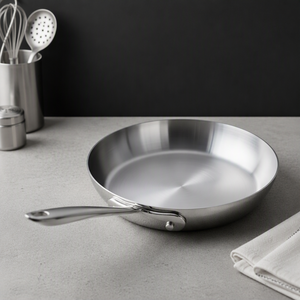



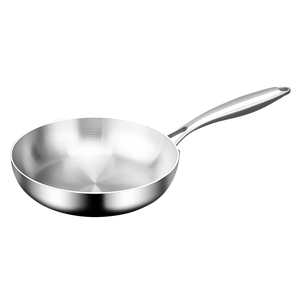

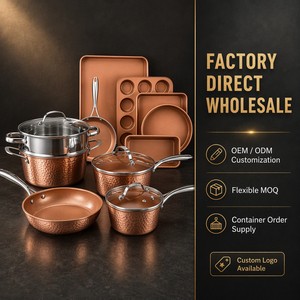
Executive Summary & Industry Overview
The global shift toward high-efficiency commercial and residential induction cooking has reshaped the global cookware supply chain. According to recent trade data, the demand for high-performance, induction-compatible cookware sets has experienced a compound annual growth rate (CAGR) exceeding 7.8%. As hospitality businesses, restaurant chains, and retail buyers demand higher durability and superior thermal responsiveness, sourcing from leading Chinese OEMs and global manufacturing partners has become a cornerstone of profitable inventory management.
Induction cooking relies entirely on electromagnetic energy transfer. Unlike conventional gas or electric radiant cooktops, an induction cooktop utilizes an alternating current passed through a copper coil beneath the glass cooktop, creating an oscillating magnetic field. When a ferromagnetic vessel is placed within this field, eddy currents are induced in the vessel's metal base, generating heat directly inside the pan via magnetic hysteresis losses. Consequently, the engineering precision of the cookware base determines up to 95% of cooking thermal efficiency.
Technical Gain Insight: Standard 18/8 (SUS304) stainless steel is inherently non-magnetic due to its austenitic crystalline structure. To render professional 304 stainless steel cookware induction-compatible, top tier manufacturers must bond or clad a magnetic ferritic stainless steel layer (such as SUS430 / 18-0) to the bottom substrate. Understanding the difference between impact-bonded capsulated bases and full-clad multi-ply construction is crucial for B2B procurement managers.
Metallurgical Architectures: Tri-Ply Clad vs. Impact-Bonded Bases
When selecting bulk induction cookware sets for global distribution, importers must evaluate two primary structural manufacturing methodologies: Impact-Bonded Encapsulated Bases and Multi-Ply Clad Metal Systems (Tri-Ply and 5-Ply).
| Performance Criterion | Impact-Bonded Capsule Base | Tri-Ply Clad Construction (3-Layer) | Five-Ply Clad Construction (5-Layer) |
|---|---|---|---|
| Layer Configuration | SUS304 Body + Alu Disc + SUS430 Cap | SUS304 (Interior) + Pure Alu + SUS430 (Exterior) | SUS304 + Alu Alloy + Pure Alu + Alu Alloy + SUS430 |
| Heat Distribution | Bottom-focused (Thermal gradient up walls) | 360-Degree Uniform Thermal Conduction | Maximum Heat Retention & Ultra-Fast Response |
| Warp Resistance | Moderate under extreme shock | High (Resistant to thermal expansion stress) | Ultra-High Commercial Grade Stability |
| Induction Efficiency rating | 82% – 88% | 90% – 95% | 94% – 98% |
| Target Procurement Market | Value Retail / Entry Commercial | Premium Retail / Professional Culinary | Heavy-Duty Commercial / Luxury Brands |
Future Procurement & Supply Chain Trends (2025–2030)
The global cookware industry is undergoing rapid technical evolution driven by environmental regulations, energy efficiency standards, and smart kitchen integration. Strategic buyers should align their purchasing decisions with these key emerging trends:
Micro-Honeycomb Laser Etching
Hybrid non-stick surfaces use raised stainless steel honeycomb ridges to shield recessed non-stick coatings, delivering metal-utensil safety and extended commercial service life.
Zero-PFOA & PFAS Regulations
Global compliance strictly mandates zero PFOA, Lead, and Cadmium. Advanced ceramic-plasma matrices and fluoropolymer-free non-stick formulations lead European & North American import acceptance.
High-Frequency Induction Base Design
Engineered bottom base profiles feature zero-warp thermal expansion grooves, preventing base concavity or convexity under high-wattage 3500W+ commercial induction hobs.
Laser Data Matrix Traceability
Next-gen OEM factories integrate permanent laser-engraved 2D Data Matrix barcodes on cookware bottoms, linking each unit to raw material heat numbers, batch QC, and ISO audit records.
Sustainable & Recycled Alloys
Using up to 75% recycled stainless steel in manufacturing significantly reduces carbon footprints while meeting strict EU Green Deal procurement guidelines without compromising tensile strength.
Custom OEM Private Labeling
Flexible tooling options for custom handles, ergonomic flame guards, silicone-rimmed tempered glass lids, and bespoke retail gift box packaging engineered for Amazon/e-Commerce drop shipping.
Enterprise Advantage & Manufacturing Excellence
As a leading export-oriented cookware enterprise, our manufacturing ecosystem combines state-of-the-art metal stamping presses, automated friction welding, and precision laser etching capabilities. Our production facility adheres rigorously to ISO 9001 quality management systems and maintains full international compliance certifications including CE, ISO 8442, ISO 4957, ISO 15510, GMP, and REACH.
Our quality control (QC) protocol involves a 5-stage verification process:
- Raw Material Spectrometry: Verifying chemical composition of incoming 304 (18/8) and 430 (18-0) steel coils to guarantee magnetic permeability and corrosion resistance.
- Impact Friction Weld Testing: Subjecting bonded capsule bases to 2,000-ton hydraulic pressure checks to eliminate internal air gaps and ensure permanent base adhesion.
- Thermal Shock Endurance: Heating cookware to 300°C followed by immediate cold-water quenching to test against base warping or delamination.
- Surface Non-Stick Abrasion: Performing 20,000+ cycle mechanical scrub tests to ensure long-lasting non-stick release.
- Salt Spray & Dishwasher Safety: Conducting 72-hour neutral salt spray (NSS) testing to guarantee zero rust formation under intensive commercial wash cycles.
Frequently Asked Questions (B2B Procurement FAQ)
How can B2B buyers verify if stainless steel cookware is truly induction compatible?
Induction compatibility requires a magnetic outer base layer. Importers can conduct a simple magnet test (the magnet must adhere strongly to the base). Mechanically, the base should utilize an AISI 430 (18-0) magnetic stainless steel layer. Furthermore, testing on commercial induction cooktops should confirm immediate electromagnetic pairing without triggering "No Pan" error codes.
What is the difference between 201 and 304 grade stainless steel for commercial cookware?
Grade 201 stainless steel contains lower nickel content (1%-3.5%) and higher manganese, making it a cost-effective option suitable for lighter restaurant duty. Grade 304 (18/8) contains 8%-10% nickel and 18% chromium, offering superior corrosion resistance, high chemical stability against acidic foods, and long-term durability in premium culinary applications.
What food contact compliance certifications are required for import into the EU and US?
For North America, products must comply with FDA food contact regulations and NSF standards for commercial kitchenware. For the European Union, cookware must meet Regulation (EC) No 1935/2004, REACH compliance, DGCCRF (France), or LFGB (Germany) standards, certifying that materials do not transfer harmful chemical constituents to food.
What are the standard Minimum Order Quantities (MOQ) and lead times for OEM private label orders?
Standard OEM production MOQs typically range from 500 to 1,500 sets per item size, depending on custom tooling requirements. Standard production lead time is 30 to 45 days following sample approval and deposit confirmation. Expedited production cycles are available for repeat catalog items.
How does the laser honeycomb design prevent coating degradation?
The laser-etched honeycomb structure creates a raised pattern of stainless steel walls above the non-stick valleys. Spatulas and metal utensils ride across the raised stainless steel peaks without directly contacting or scraping the underlying non-stick coating, extending product lifespan up to 4x compared to traditional flat non-stick surfaces.
Ready to Source High-Performance Induction Cookware?
Partner with China's top certified manufacturer for direct factory pricing, OEM/ODM custom tooling, and reliable global export shipping.