


Industry Insights & Manufacturing Blog
Explore expert technical guides, material standards, and global supply chain updates from Prowa Kitchenware Industries.
Featured High-Performance Cookware & Caldero Collections
Engineered for commercial kitchens, institutional catering, and private-label global brands. Compliant with FDA, LFGB, CE, and ISO 9001 quality frameworks.

Wholesale Induction Non-Stick Honeycomb Tri-Ply Skillet Fry Pan
Get Catalog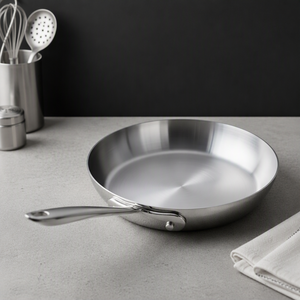
Heavy Duty 201 Stainless Steel 3.0mm Restaurant Frying Pan
Get Catalog
Professional 3-Ply 304 Stainless Steel Honeycomb Cooking Pot
Get Catalog
Professional Tri-Ply Clad Pots & Pans Induction Cookware Set
Get Catalog
Custom 22CM 18/8 (304) Stainless Steel Tri-Ply Pan with Lid
Get Catalog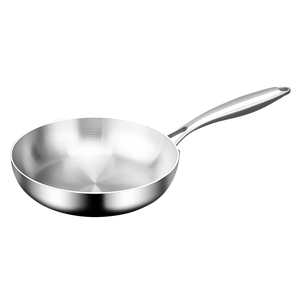
Eco-Friendly 5-Ply Clad 304 Stainless Steel 8-Inch Fry Pan
Get Catalog
Modern Non-Stick Honeycomb Laser-Etched Stainless Steel Pan
Get Catalog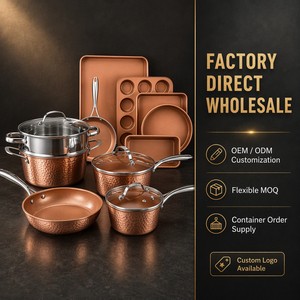
Commercial Hammered Finish Non-Stick Cookware & Stockpot Set
Get CatalogMetallurgical Foundations of High-Quality Aluminum Calderos
In global culinary manufacturing, the Caldero (traditionally recognized across Latin American, Hispanic, and Caribbean cuisines as the essential Dutch oven variant) requires exact metallurgical balance to deliver superior thermal distribution, structural integrity under high heat, and long-term chemical stability. As premier OEM/ODM manufacturers, leading Chinese cookware facilities utilize specialized high-purity aluminum alloys—specifically AA3003 and AA5052 metallurgical grades—to construct calderos that vastly outperform standard stamped kitchenware.
Thermal Conductivity Comparison: Pure aluminum demonstrates an exceptionally high thermal conductivity rate of approximately 237 W/m·K, compared to stainless steel’s modest 16–24 W/m·K and cast iron’s 52 W/m·K. This inherent physical property enables aluminum caldero sets to eliminate localized hot-spots, ensuring uniform thermal diffusion across the vessel floor and sidewalls during slow-simmering of rice (Arroz con Gandules), braising meats, or preparing heavy sauces.
Die-Cast vs. Heavy-Gauge Forged Aluminum Caldero Fabrication
Procurement directors evaluating supplier capabilities must distinguish between three primary industrial manufacturing methods:
- Heavy-Die-Cast Aluminum: Molten aluminum alloy is injected under extreme hydraulic pressure into high-precision steel molds. This process creates thick bottom bases (typically 4.5mm to 6.0mm) paired with tapered sidewalls (2.5mm to 3.5mm), offering robust resistance to thermal warping while minimizing total pot mass. Integrated cast aluminum handles eliminate food-trap crevices and structural rivet failure points.
- Forged Heavy-Gauge Aluminum: High-tonnage mechanical forging presses shape solid aluminum blanks. Forging aligns the metal’s crystalline grain structure, resulting in superior tensile strength, enhanced fatigue resistance, and smooth surface topography suitable for advanced multi-layer PTFE or ceramic coating adhesion.
- Stamped Aluminum (Entry Level): Cold-rolled sheet aluminum is pressed into shape. While cost-effective, stamped calderos below 2.5mm gauge are prone to bottom bowing over high-BTU gas burners and uneven heat retention compared to die-cast or forged alternatives.
OEM & ODM Manufacturing Infrastructure & Compliance
Operating with 100% export compliance, automated robot-arm polishing, and rigorous batch traceability for international distributors.
Advanced Data Matrix Laser Traceability
Every caldero unit can be permanently engraved with an industrial Data Matrix code storing material grade, batch ID, production date, and QC inspection sign-offs for seamless supply chain tracking.
Certified Zero-Leach Safety Systems
Fully compliant with FDA 21 CFR 175.300, EU No 10/2011, REACH, and LFGB food contact standards. Guaranteed 100% free of PFOA, PFOS, Lead, Cadmium, and toxic heavy metals.
Custom Tooling & Rapid Prototyping
In-house CNC mold-making capabilities enable custom rim profiles, proprietary handle ergonomics, embossed brand logos, and specialized lid configurations in under 25 business days.
Caldero Manufacturing Specifications Comparison
A side-by-side engineering evaluation of caldero structural variants for volume B2B buyers.
| Evaluation Parameter | Die-Cast Aluminum Caldero | Forged Heavy-Gauge Caldero | Tri-Ply Clad Stainless/Alu | Stamped Standard Caldero |
|---|---|---|---|---|
| Base Thickness Range | 4.5mm – 6.0mm | 3.5mm – 4.5mm | 2.5mm – 3.0mm | 1.8mm – 2.5mm |
| Thermal Uniformity Index | ✓ 98% (Exceptional) | ✓ 94% (Very High) | 88% (High) | 72% (Moderate) |
| Warp Resistance Threshold | Up to 450°C (842°F) | Up to 380°C (716°F) | Up to 400°C (752°F) | Up to 260°C (500°F) |
| Induction Compatibility | Impact-Bonded Steel Plate | Impact-Bonded Steel Plate | ✓ Native Magnetic SS | Requires Spray Base |
| Handle Integration | Monobloc Die-Cast (Rivets Free) | Heavy Stainless Rivets | Ergonomic Cast Stainless | Stamped Metal Riveted |
| Commercial Lifespan | 8–12 Years Commercial | 5–8 Years Commercial | 10+ Years Commercial | 1–3 Years Household |
Global Sourcing Trends & Innovation Roadmap (2025–2030)
The global cookware market is undergoing a rapid transition toward sustainable materials, energy-efficient cooking bases, and non-toxic surface treatments. Institutional buyers, retail chain merchandisers, and OEM brand managers sourcing aluminum caldero sets from China must align with four key market shifts:
1. Universal Induction Compatibility (Impact-Bonding 2.0): Traditional calderos were designed primarily for open gas flames or electric coil stoves. Modern global consumers demand seamless performance across gas, electric, glass-ceramic, and induction cooktops. Advanced Chinese manufacturers utilize high-tonnage friction-impact bonding to press a 430 (18/0) magnetic stainless steel perforated base plate into the aluminum caldero bottom at over 2,000 tons of pressure, eliminating air gaps and preventing plate separation during thermal cycling.
2. Next-Generation Sol-Gel Ceramic Coatings: As environmental regulations tighten globally (such as proposed REACH restrictions on PFAS chemicals in the European Union and state-level EPA bans in North America), demand is shifting toward inorganic Sol-Gel ceramic non-stick coatings. Derived from silica sand, ceramic coatings provide scratch resistance up to 9H hardness, withstand temperatures exceeding 400°C without toxic fumes, and offer slick food release properties.
3. Hard Anodization Surface Hardening: Hard-anodized aluminum calderos undergo an electrochemical bath process that transforms the outer layer of aluminum into aluminum oxide. The resulting surface is twice as hard as stainless steel, non-reactive to acidic foods (such as tomato sauces or citrus marinades), highly corrosion-resistant, and dishwasher safe.
4. Ergonomic Hybrid Lid Systems: Moving away from simple flat aluminum lids, modern caldero sets feature heavy domed cast aluminum covers with self-basting interior condensation spikes or tempered glass lids fitted with silicone heat-resistant rims and integrated steam-release vents.
Frequently Asked Questions for B2B Sourcing
Technical and commercial clarity for procurement managers, importers, and brand owners.
Partner with China’s Premier Aluminum Caldero Manufacturers
Accelerate your product portfolio with precision-engineered die-cast and forged aluminum cookware. Access complete engineering specs, factory-direct OEM pricing, and comprehensive product catalogs today.