


Industry Insights & Manufacturing Blog
Explore expert technical guides, material standards, and global supply chain updates from Prowa Kitchenware Industries.

Induction Non-Stick Skillet Triply Stainless Steel Honeycomb Cookware Fry Pan
Contact Us
Commercial Wholesale 201 Stainless Steel Pan 3.0mm Thickness Heavy Duty
Contact Us
Professional 3-Layer Cooking Pot 304 Tri Ply Stainless Steel Honeycomb Pan
Contact Us
TIANXING Multi-Ply Clad Stainless Steel Cookware Set Professional Tri-Ply Pots
Contact Us
Customized Tri-Ply Frying Pan 22CM 18/8 304 Stainless Steel Cookware with Lid
Contact Us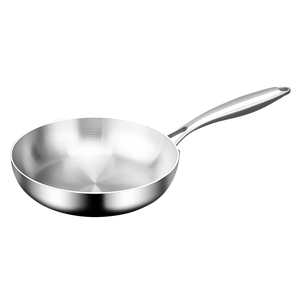
Five-Ply Clad 304 Stainless Steel 8-Inch Frying Pan Food Grade Nonstick Glass Cover
Contact Us
Modern Nonstick Stainless Steel Fry Pan Laser Honeycomb Design Cookware
Contact Us
Hammered Copper Nonstick Cookware Set Glass Lids Stainless Steel Stockpot
Contact Us1. Industry Executive Summary & Technical Sourcing Baseline
In the hyper-competitive global commercial kitchenware sector, procuring high-performance stainless steel pots and pan assemblies demands a deep understanding of metallurgy, regulatory compliance, and thermal engineering. As institutional buyers, restaurant supply distributors, and private label brands update their sourcing frameworks, compliance with European Union (CE) standards has evolved from a basic credential to a critical operational requirement. CE certified stainless steel cookware guarantees non-toxicity, chemical stability under thermal stress, mechanical integrity, and absolute food contact safety in line with strict international standards.
Modern commercial kitchens are shifting away from traditional single-ply encapsulated bottom pans toward multi-ply clad structures (Tri-Ply and 5-Ply fully bonded bodies). Driven by energy efficiency goals and the widespread adoption of induction cooktops, engineering focus has turned to optimal heat transfer efficiency. Premium stainless steel pot manufacturing combines the chemical stability of food-grade 18/8 (AISI 304) stainless steel with the high thermal conductivity of pure aluminum core alloys (Alloy 1050/3003) and the magnetic performance of AISI 430 ferritic stainless steel.
2. Metallurgical Comparative Database: Material Selection Criteria
A primary challenge for procurement officers is balancing raw material costs against long-term operational durability and food safety. Misunderstanding stainless steel grades often leads to premature pitting corrosion, structural delamination, or non-compliance with regional import safety regulations. Below is a comprehensive engineering comparison of the core alloys used in export-standard cookware production:
| Steel Alloy Grade | Chemical Composition (Cr/Ni/Mn) | Corrosion Resistance | Thermal Conductivity | Induction Magnetic Permeability | Optimal B2B Application |
|---|---|---|---|---|---|
| AISI 304 (18/8 or 18/10) | 18% Cr, 8-10% Ni, <2% Mn | Superior (Passivated) | 16.2 W/m·K | Non-Magnetic (Austenitic) | Interior Food Contact Surface |
| AISI 316 (18/10/2 Mo) | 16-18% Cr, 10-14% Ni, 2-3% Mo | Exceptional (Saline/Acid Resistant) | 16.3 W/m·K | Non-Magnetic (Austenitic) | Medical & High-Acid Culinary Equipment |
| AISI 430 (18/0) | 16-18% Cr, 0% Ni, <1% Mn | Moderate to High | 26.0 W/m·K | High (Ferritic Magnetic) | Exterior Base Cladding Layer |
| AISI 201 (J1/J4 Grade) | 13-15% Cr, 1-3% Ni, 5.5-7.5% Mn | Low to Moderate (Prone to Pitting) | 15.0 W/m·K | Non-Magnetic (Austenitic) | Budget Institutional Cookware / Dry Utensils |
Cladding Physics: Tri-Ply vs. 5-Ply Structural Mechanics
Traditional single-ply pots rely on a disc-bonded base (impact-bonded aluminum disc encapsulated at the bottom). While cost-effective, disc bottoms create thermal hot spots along the lower sidewalls, leading to scorched food and uneven pan temperature distribution.
Advanced high-export clad cookware uses continuous roll-bonding technology. In a Tri-Ply configuration (304 Stainless Steel + Pure Aluminum Core + 430 Ferritic Steel), heat transfers evenly up the rim of the pot at an efficiency rate 300% faster than solid stainless steel. In a 5-Ply configuration (304 Stainless Steel + 1050 Aluminum + Pure Copper Core + 1050 Aluminum + 430 Stainless Steel), thermal response times match traditional solid copper cookware while retaining the non-reactive hygienic advantages of food-grade stainless steel.
3. Manufacturing Excellence & Quality Control Infrastructure
As showcased by leading international manufacturing clusters such as Prowa Kitchenware Industries in Sialkot, Pakistan, the engineering process behind export-grade cookware combines high-tonnage deep-drawing hydraulic pressing with automated precision finishing.
Passivation Layer Engineering
Every vessel undergoes a chemical citric-nitric acid passivation bath. This removes surface free-iron particles, forming a uniform 25-micron chromium oxide layer that prevents rust and corrosion.
Honeycomb Micro-Etching
Utilizing high-precision laser engraving, elevated stainless steel micro-structures protect the underlying non-stick coating from metal spatula wear, extending pan service life by 400%.
Data Matrix Traceability
Permanent laser-engraved 2D Data Matrix barcodes store item codes, material batches, quality inspection records, and origin data, giving supply chains complete digital visibility.
PFOA, Lead, and Heavy Metal Compliance Protocol
Global food safety laws (including US FDA, EU REACH, and Germany's LFGB) strictly regulate non-stick coatings and metal food contact equipment. Premium export manufacturers ensure all PTFE non-stick surfaces are completely PFOA, PFOS, Lead, and Cadmium-free. Dual-stage thermal curing at 420°C guarantees total polymer stabilization, eliminating harmful gas off-gassing at high cooking temperatures.
4. Global Procurement & Supply Chain Trends (2025–2030)
International buyers are restructuring their kitchenware sourcing strategies to navigate shifting geopolitical landscape risks, shipping costs, and changing consumer demands. Procurement teams must adapt to four main market trends:
Induction Universalization
With commercial kitchens electrifying to meet ESG targets, demand for 430-clad magnetic bottom cookware is growing at 8.4% CAGR worldwide.
Supply Chain Diversification
Global brands are expanding procurement beyond traditional manufacturing hubs, sourcing from specialized metalworking ecosystems like Sialkot, Pakistan for high quality-to-cost ratios.
Circular Metal Economy
Recycled stainless steel content (scrap-to-ingot processing) now exceeds 75% in tier-1 manufacturing facilities, drastically cutting carbon footprints per production unit.
As commercial kitchens lean heavily on automated dishwashing and intensive daily sanitization, demand for hollow cast stainless steel handles secured by heavy-duty 304 rivets has risen sharply. Hollow handles create a thermal break to stay cool on the stovetop, while dual-riveted connections deliver superior shear strength compared to spot-welded alternatives.
5. Frequently Asked Technical Procurement Questions (FAQ)
6. Factory Infrastructure & Manufacturing Capability Matrix
When partnering with an international kitchenware manufacturer, evaluating their production capabilities, machinery, and quality control systems is essential. Leading facilities like Prowa Kitchenware Industries operate comprehensive in-house production ecosystems:
Precision Stamping Press Lines
Equipped with 500-ton to 1200-ton hydraulic deep-drawing presses capable of drawing single-sheet pot bodies up to 40cm depth without structural fatigue.
Automated Surface Polishing
8-stage robotic polishing stations deliver mirror finishes (Ra < 0.2 µm) or uniform satin brushed textures resistant to surface fingerprints.
On-Site Metallurgical Lab
Spectrographic alloy checking, salt-spray corrosion chamber testing, and handle drop-impact strength testing ensure batch-to-batch consistency.
By implementing lean manufacturing principles, modern facilities save over 180 tons of metal annually through precision blanking techniques. This reduces scrap waste and allows cost savings to be passed directly to OEM procurement partners.
Request Enterprise Procurement & OEM Quotations
Connect with our technical engineering team for custom product catalogs, factory audit reports, sample requests, and wholesale price quotes. Our team responds within 2 business hours.
Contact Us