


Industry Insights & Manufacturing Blog
Explore expert technical guides, material standards, and global supply chain updates from Prowa Kitchenware Industries.
Precision-Engineered Stainless Steel Flatware & Utensils
Certified food-grade custom engraved flatware, measuring instruments, and promotional cutlery manufactured for global distributors, luxury hospitality brands, and OEM private labels.
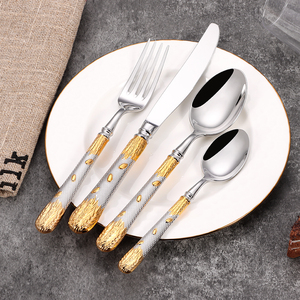 18/10 Stainless
Restaurant Luxury Gold Cutlery Set Spoon & Fork
- Grade: AISI 304 (18/10)
- Finish: Titanium Gold PVD
- Mark: Custom Fiber Laser
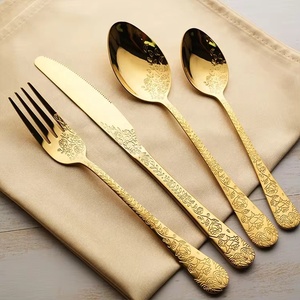 Pattern Engraved
Custom Engraved Pattern Wedding Cutlery Set
- Technique: Deep Etch / Relief
- Safety: Dishwasher Safe EN 12875
- Packaging: Custom Gift Box
 Precision Gauge
Logo Engraved Measuring Spoons for Coffee & Milk
- Volumetric: Exact Volumetric Scale
- Material: 304 Food Grade SS
- OEM Packaging: Retail Card Box
 18/0 Ferritic SS
18/0 Gold Flatware Set Laser Engraved Logo Cutlery
- Magnetic: 430 Magnetic Grade
- Marking: High Contrast Fiber Laser
- Compliance: CE / EU 1935/2004
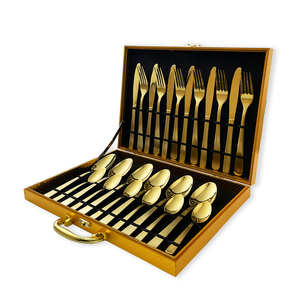 24-Piece Gift Set
24pcs Luxury Gold Spoon & Fork Set with Wooden Box
- Content: 6 Dinner Knives, Forks, Spoons
- Plating: Bio-compatible TiN PVD
- Engraving: Crest / Brand Monogram
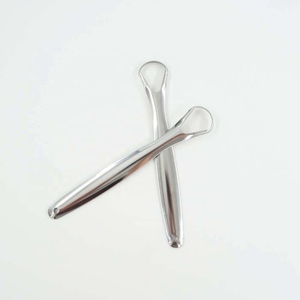 Personal Care OEM
Promotional Logo Engraved Stainless Steel Scraper
- Edge: Smooth Electropolished Edge
- Grade: Medical / Food Grade SS
- Marking: Permanent Laser Logo
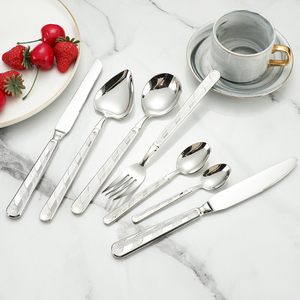 Heavy Gauge 18/10
Personalized 18/10 Custom Engraved Cutlery Set
- Composition: 18% Cr / 10% Ni
- Ergonomics: Hand-Balanced Weight
- Etching: Non-Corrosive Fiber Laser
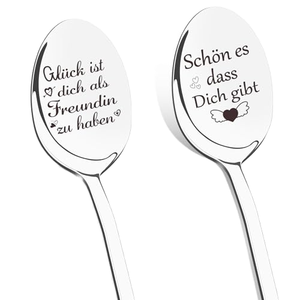 2-Piece Gift Set
Personalized 2-Piece Stainless Steel Coffee Spoons
- Surface: Mirror Polish Grade A
- Cleaning: Dishwasher Safe Safe-Lube
- Target: Specialty Coffee Roasters
1. Executive Summary & Metallurgy Standardizations
In high-volume commercial catering, hotel supply chains, and private-label homeware distribution, selecting high-performance stainless steel utensils demands rigorous metallurgical analysis and precise factory compliance. Custom-engraved stainless steel cutlery serves not only functional culinary requirements but also acts as an extension of brand identity for hospitality groups and corporate gifting lines. As certified factories and international exporters operating under stringent Quality Management Systems (ISO 9001:2015), our production processes reconcile structural metallurgy with high-contrast, non-degradable custom engraving.
Understanding the distinction between alloy grades is critical for corporate procurement officers. Cutlery performance relies primarily on Chromium (Cr) for corrosion resistance, Nickel (Ni) for luster and acid protection, and Carbon (C) for tensile hardness in cutting edges:
| Alloy Grade | Chemical Composition | Corrosion Resistance | Magnetic Property | Primary B2B Application | CE Standard Compliance |
|---|---|---|---|---|---|
| AISI 304 (18/10) | 18% Cr / 10% Ni | Exceptional (High Acid) | Non-Magnetic (Austenitic) | Luxury Hotel Flatware, Fine Dining | EU 1935/2004 |
| AISI 304 (18/8) | 18% Cr / 8% Ni | Superior (Standard Commercial) | Non-Magnetic (Austenitic) | Banqueting Sets, Catering Utensils | EU 1935/2004 |
| AISI 430 (18/0) | 18% Cr / 0% Ni | Moderate (Daily Wash Safe) | Magnetic (Ferritic) | Airline Catering, Magnetic Sorting | EN 631-1 |
| AISI 420 / 410 | 13% Cr / 0.15–0.4% C | Standard Hardened | Magnetic (Martensitic) | Serrated Knife Blades, Steak Knives | ISO 8442-1 |
Information Gain: Passivation & Microstructural Integrity
During the thermal pulse of laser engraving, local Chromium depleted zones (Cr-depleted sensitization) can render inferior steel susceptible to crevice corrosion. Certified export factories employ post-engraving chemical nitric/citric acid passivation (ASTM A967 standard). This process strips free surface iron and reconstitutes a dense passive Chromium Oxide (Cr₂O₃) protective layer over the laser markings, preserving rust-free longevity through 1,000+ industrial dishwasher cycles.
2. Precision Custom Engraving Technologies Comparison
For B2B buyers seeking branded flatware, OEM promotional spoons, or personalized gift cutlery, selecting the appropriate engraving technique directly impacts unit costs, lead times, and tactile fidelity. OEM utensil exporters utilize four primary industrial marking techniques:
Fiber MOPA Laser
Delivers pulse-width control allowing true anneal black marking on stainless steel without vaporizing metal. Zero tactile roughness, ultra-hygienic, ideal for medical or luxury restaurant logos.
Electro-Chemical Etching
Uses conductive stencils and electrolyte fluids to etch high-volume simple logos. Highly cost-efficient for mass promotional runs, though limited to single-color shallow dark marks.
3D Mechanical Embossing
Integrated into hydraulic forging dies prior to polishing. Creates permanent relief patterns directly in the metal matrix. Best suited for high-volume custom handle textures and floral motifs.
3. International Food Safety Certification & Quality Assurance
Global exporters must maintain total regulatory alignment to avoid border impoundments or non-compliance penalties in North American and European destinations. CE Marking on custom stainless steel kitchenware certifies compliance with EU Regulations (EC) No 1935/2004 on Materials and Articles Intended to Come into Contact with Food. Crucial verification metrics include:
- Heavy Metal Extraction Limits: Verification via ICP-MS testing that Lead (Pb), Cadmium (Cd), Nickel (Ni), and Cobalt (Co) leaching levels are below EDQM threshold limits.
- ISO 8442-2 Requirements: Dimensional tolerances, handle connection strength, knife sharpness retention (ISO 8442-5), and stain resistance.
- PVD Coating Safety: Titanium Nitride (TiN) physical vapor deposition coatings applied under high vacuum at 400°C must meet FDA 21 CFR 175.300 standards for inert food-contact safety.
4. Global Procurement & Strategic Sourcing Trends (2025–2030)
The global commercial flatware market is undergoing structural shifts driven by automation, sustainability directives, and smart inventory management. Key procurement trends shaping manufacturing orders include:
A. Direct-on-Part (DOP) Data Matrix Barcoding: Commercial catering equipment buyers and airline supply chains increasingly request permanent 2D Data Matrix codes micro-engraved onto utensil handles. This enables automated machine vision scanning during industrial washing and inventory sorting, drastically reducing tableware loss rates.
B. Transition to PVD Eco-Finishing: Traditional chemical electroplating produces hazardous heavy metal sludge. Modern export factories have fully transitioned to physical vapor deposition (PVD), producing durable gold, rose gold, matte black, and rainbow gunmetal coatings with zero aqueous toxic byproduct.
C. Closed-Loop Metal Recycling in OEM Production: Leading manufacturers utilize scrap steel recovery protocols where cold-rolled trimming offcuts are re-melted into industrial billets. Sourcing from factories with ISO 14001 environmental management ensures reduced Scope 3 carbon footprints for corporate retail chains.
Frequently Asked Questions by B2B Buyers
Detailed technical and commercial answers regarding minimum order quantities, certification compliance, laser depth, and global export shipping.
Ready to Scale Your Commercial Cutlery Sourcing?
Partner directly with certified stainless steel utensil exporters. Request OEM production schedules, material testing datasheets, and our comprehensive B2B product catalog today.