
Industry Insights & Manufacturing Blog
Explore expert technical guides, material standards, and global supply chain updates from Prowa Kitchenware Industries.
10 Tips for Buying Stainless Steel Chafing Dishes?
Table of Contents
- What to Know About Stainless Steel Chafing Dish Designs
- How to Evaluate Materials, Construction, and Durability
- How to Choose the Right Size, Shape, and Capacity
- How to Compare Heating Systems, Lids, and Serving Features
- How to Check Safety, Maintenance, Warranty, and Overall Value
- FAQS
- Conclusion
- Related Posts
Buying Stainless Steel Chafing Dishes looks simple until a busy buffet exposes their weaknesses. A polished finish may attract attention, but it cannot reveal poor welds, thin metal, unstable frames, or unreliable heat control. After inspecting catering equipment and observing service teams, I have learned one uncomfortable truth: attractive dishes are not always dependable dishes. Small details matter.
Foodservice equipment consultant Robert M. Lewis offers a useful principle: “A good chafing dish protects the food, the server, and the service rhythm.” That idea shapes these ten practical tips. We will examine stainless-steel grades, metal thickness, pan capacity, lid design, water-pan depth, fuel compatibility, frame stability, handles, cleaning demands, and warranty support. Each feature affects real service. A loose lid can burn fingers. A shallow water pan can dry out food. A weak frame can wobble when guests reach across a crowded table.
There is no perfect model. Not every expensive dish performs better. Some budget options work well, while premium designs may disappoint in daily use. That deserves reflection. The right Stainless Steel Chafing Dishes should match your menu, guest volume, serving frequency, and cleaning routine. Look beyond showroom shine. Touch the handles. Check the hinge. Inspect the corners. Then choose equipment that remains steady when the room becomes noisy, crowded, and difficult.
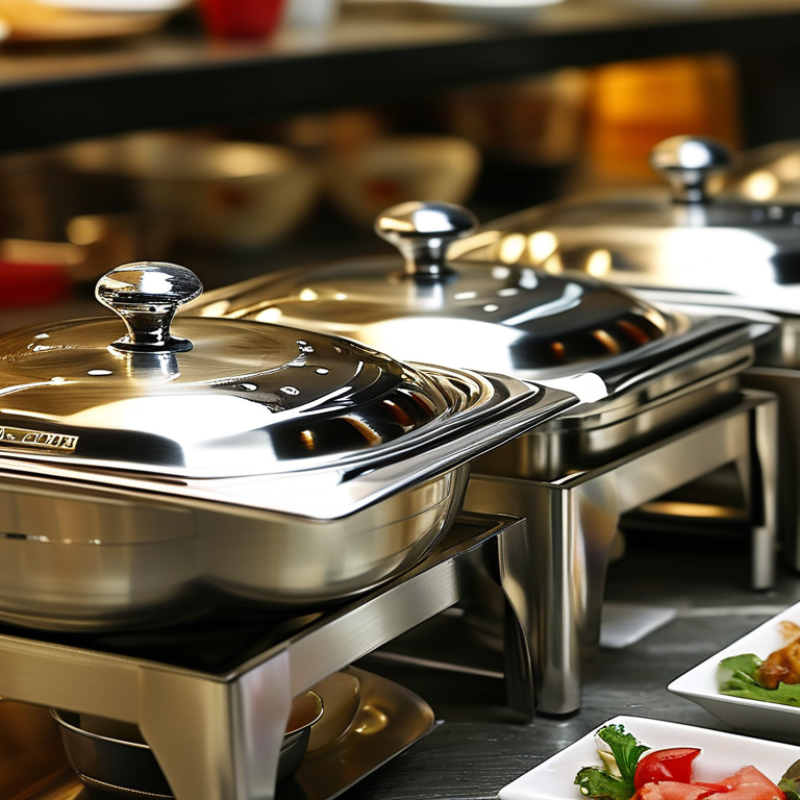
What to Know About Stainless Steel Chafing Dish Designs
When buying a stainless steel chafing dish, study its design before judging its shine. The shape affects serving speed, heat coverage, and table space. Round dishes suit compact stations and display food attractively. Rectangular dishes hold more portions and fit buffet lines efficiently. Details matter. Check whether the water pan sits evenly inside the frame.
A dependable design should include a stable stand, secure fuel holders, and handles that remain comfortable during service. Inspect the welds and corners closely. Rough edges can collect food residue and make cleaning difficult. A tight-fitting lid helps retain warmth, while a hinged lid reduces table clutter. Some lids open too far and strike nearby dishes. Test the movement before purchasing.
Capacity should match your typical menu, not your largest event. A smaller dish may conserve heat better when serving limited portions. For busy buffets, removable pans can simplify refilling and washing. Stainless steel thickness also matters, although heavier does not always mean better. I once chose a heavy model that became awkward to carry after a long event. That mistake changed my buying checklist. I now test empty dishes for balance, lid control, and storage fit. Look for clear material details, consistent polishing, and replacement parts that are easy to identify. A polished surface looks impressive, but practical access matters more.
How to Evaluate Materials, Construction, and Durability
10 Tips for Buying Stainless Steel Chafing Dishes?
How to Evaluate Materials, Construction, and Durability
Tip 1: Check the steel grade and food-contact documentation. A thicker stainless body usually resists dents and keeps heat more evenly. Tip 2: Inspect the welds around handles, corners, and the water pan. Clean, continuous welds suggest better construction. Tip 3: Press the base gently. It should feel rigid, not springy. Tip 4: Look for a flat, stable frame. Wobbling is annoying during busy service. Tip 5: Examine the lid hinge and handle. They should move smoothly without loose screws or sharp edges.
Tip 6: Compare the pan depth with your serving needs. Shallow pans may dry food faster. Tip 7: Check whether the water pan sits securely inside the frame. Even spacing helps distribute heat. Tip 8: Inspect the feet and legs for strong connections. Weak joints often fail before the stainless surface does. Tip 9: Ask how easily the dish can be cleaned. Food trapped in narrow seams creates unnecessary work. Tip 10: Review the warranty and replacement-part policy before buying.
In my experience, polished surfaces look impressive, but they can show fingerprints quickly. Brushed finishes often hide daily marks better. I once overlooked a loose lid handle, and repeated handling made it worse. That mistake changed my inspection routine. I now lift the lid, test every joint, and check the underside for rough edges. A good chafing dish should feel dependable before it reaches a crowded buffet.
How to Choose the Right Size, Shape, and Capacity
Choosing a stainless steel chafing dish starts with service volume, not appearance. A full-size pan often holds about 8 to 9 quarts, while a half-size pan usually holds 4 to 5 quarts. For a buffet serving 30 guests, two smaller pans may work better than one deep pan. Food stays fresher when staff refill smaller batches. My own mistake was choosing maximum capacity for a short event. The dish looked impressive, but much food cooled before guests returned.
Tip 1: Match capacity to guest flow. Estimate portions, then add a modest 10% buffer. A 2.5-inch pan suits shallow foods, such as roasted vegetables. A 4-inch pan offers more depth for pasta or sauced dishes. Measure the insert, not only the outer frame. Dimensions can vary between suppliers.
Tip 2: Choose the shape around the menu. Rectangular dishes use buffet space efficiently and suit sliced meats or rice. Round dishes create easier access for soups and stews. Oval designs can improve presentation, but they may waste table space. Stainless steel also shows fingerprints quickly. That is easy to underestimate.
Food safety should guide the purchase. The FDA Food Code 2022 sets 135°F as the minimum hot-holding temperature for time-temperature controlled foods. Select a dish with a stable water pan, secure lid, and reliable heat source. The USDA also emphasizes monitoring temperatures with a calibrated thermometer. Capacity alone does not protect quality. Check the center of the food, not just the pan surface. A smaller, well-monitored dish may outperform a larger one.
How to Compare Heating Systems, Lids, and Serving Features
10 Tips for Buying Stainless Steel Chafing Dishes
How to Compare Heating Systems, Lids, and Serving Features
When I inspect a stainless steel chafing dish, I test its heating system before judging its shine. Water pans spread heat gently and help protect delicate foods from scorching. Fuel holders are simple, but their heat can fluctuate during long service. Electric heating offers steadier control, yet it needs a nearby outlet and careful cable placement. Induction-ready bases can improve efficiency, but compatibility must be verified with the appliance manual. Check temperature recovery after opening the lid. That small test reveals real performance.
Lid design affects service speed, heat retention, and cleanliness. Roll-top lids save table space and stay attached, while lift-off lids are easier to remove and wash. A viewing window helps staff check food without releasing much heat. Look for strong hinges, balanced handles, and a lid that closes without slamming. Condensation also matters. Excess moisture can drip into sauces and soften crisp toppings. I once chose a beautiful lid that trapped too much steam. That mistake changed my buying checklist.
Serving features deserve equal attention. Wide, heat-resistant handles make full pans safer to move. Ladle notches reduce spills, especially during crowded buffets. Rounded interior corners allow easier cleaning and fewer food deposits. Check pan depth, stacking stability, weld quality, and replacement-part availability. Smooth edges feel minor in a showroom. They matter after three hours of service. Ask for operating instructions and care guidance, not just capacity figures.
10 Tips for Buying Stainless Steel Chafing Dishes? - How to Compare Heating Systems, Lids, and Serving Features
| Tip | Buying Dimension | What to Compare | Practical Facts | Recommended Check |
|---|---|---|---|---|
| 1 | Stainless Steel Grade | 18/8 or 18/10 stainless steel versus lower-grade stainless steel | 18/8 and 18/10 stainless steels are commonly associated with 304-series stainless steel and provide good corrosion resistance for foodservice use. The exact grade should be confirmed in the product specification. | Look for the stated steel grade, smooth welds, even polishing, and no exposed rust-prone components in areas that contact food. |
| 2 | Heating System | Water-bath, dry heat, induction, or electric heating | Water-bath heating distributes heat gently and helps reduce hot spots. Dry heat is simpler but may dry food more quickly. Induction and electric systems require compatible equipment and a suitable power supply. | Choose water-bath heating for moisture-sensitive dishes, and verify whether the base is specifically designed for induction or electric use. |
| 3 | Fuel Compatibility | Canned chafing fuel, wick fuel, gel fuel, or no-fuel operation | Fuel holders are convenient for locations without electrical outlets, but they require ventilation, stable placement, and safe handling. Fuel containers and burners are not universally interchangeable. | Confirm the burner diameter, fuel type, flame-control mechanism, and whether the fuel holder has a secure support ring. |
| 4 | Pan Capacity and Size | Full-size, half-size, or compact serving pan | Common catering formats include full-size pans of approximately 20 to 22 quarts and half-size pans of approximately 8 to 10 quarts, although actual usable capacity varies by pan depth and design. | Match the pan format to the amount of food, table space, transport method, and the serving utensils that will be used. |
| 5 | Lid Design | Lift-off, roll-top, hinged, or glass-view lid | Lift-off lids are simple and easy to clean. Roll-top and hinged lids save table space and reduce the need for a separate lid-resting area. Glass-view lids can improve visibility but may require more careful handling. | Check the lid clearance, handle temperature, hinge strength, opening angle, and whether the lid can remain stable during serving. |
| 6 | Temperature Control | Adjustable flame, thermostat, heat levels, or manual control | Adjustable controls make it easier to maintain serving temperature without excessive heating. A chafing dish is intended to keep properly heated food warm, not to rapidly cook or reheat cold food. | Prefer clear heat settings or a controllable burner, and use a food thermometer to verify safe holding temperatures according to local food-safety guidance. |
| 7 | Stability and Safety | Leg structure, locking points, fuel shielding, and base stability | A wide, level base helps reduce tipping. Fuel flames should be shielded from accidental contact, and handles or supports should remain stable when the pan is full. | Test the empty unit for wobble, inspect the burner support, and confirm that the pan sits securely without shifting. |
| 8 | Serving Features | Utensil holders, ladle rests, drip-free edges, and divided pans | Built-in utensil rests can reduce table clutter. Divided pans are useful for keeping two foods separate, but they may reduce flexibility compared with a single open pan. | Check whether serving spoons, tongs, or ladles are included and whether the holder keeps utensils above the food-contact surface. |
| 9 | Cleaning and Maintenance | Removable parts, dishwasher guidance, and surface finish | Removable pans and water trays simplify cleaning. Stainless steel can discolor from high heat, salt, or harsh chemicals, so care instructions should be followed carefully. | Confirm which components are dishwasher-safe, remove fuel or electrical parts before washing, and avoid abrasive cleaners on polished surfaces. |
| 10 | Storage and Transport | Stackability, carrying handles, packed dimensions, and total weight | Full-size stainless steel units can be heavy when filled. Stackable frames and removable pans can reduce storage volume and make event transport easier. | Measure the storage area, check the packed weight, and verify that frames, lids, water trays, and burners can be transported securely. |
Note: Product specifications, heating performance, capacity, and cleaning instructions vary by design. Always review the manufacturer’s technical and safety instructions before purchase and use.
How to Check Safety, Maintenance, Warranty, and Overall Value
10 Tips for Buying Stainless Steel Chafing Dishes?
Safety should be checked before appearance. Choose food-contact stainless steel with clear material information. Look for stable legs, secure handles, smooth welds, and a lid that opens without sudden movement. The water pan should sit evenly and resist tipping. Check the heating system’s instructions, ventilation requirements, and heat limits. Never assume a polished surface proves quality. Ask for safety documentation when available. Small flaws matter.
Maintenance affects daily value. Select removable pans with rounded corners and few hard-to-reach seams. These details reduce trapped grease and make cleaning more reliable. Stainless steel usually tolerates frequent washing, but harsh chlorine products can stain or damage it. Dry every part after cleaning, especially around hinges and welds. Do not guess. I once focused too much on mirror-like finishing and overlooked a loose handle. That mistake could have caused spills during service.
Warranty terms deserve careful reading. Confirm the coverage period, included components, replacement-part availability, and return procedure. Ask whether dents, discoloration, warped pans, or heating accessories are excluded. Keep invoices and inspection records. A longer warranty is not automatically better if support is slow or parts are unavailable. Compare the purchase price with cleaning labor, fuel costs, storage space, and expected replacement needs. A slightly heavier dish may offer better stability, but excessive weight can burden staff during busy events. Value is practical, not merely cheap.
FAQS
Round dishes suit compact tables and create an attractive food display. Rectangular dishes hold more portions and fit buffet lines efficiently.
The water pan should sit evenly inside the frame. Even spacing supports more consistent heat coverage.
Look for a flat, stable frame with strong feet and legs. Wobbling becomes frustrating during busy service.
Lift and close the lid several times. Check the hinge, handle, movement, and nearby table clearance.
Match the dish to your usual menu, not your largest event. Smaller portions may conserve heat more effectively.
No. A heavier dish may resist dents but become awkward to carry. I once learned this after a long event.
Inspect continuous welds around handles, corners, and the water pan. Press the base gently; it should feel rigid, not springy.
Avoid narrow seams, rough edges, and difficult corners where food residue can collect. Removable pans often simplify washing and refilling.
Polished steel looks impressive but shows fingerprints quickly. Brushed steel often hides daily marks better.
Review material details, food-contact documentation, warranty terms, and replacement-part availability. Also test balance, lid control, and storage fit.
Conclusion
Buying Stainless Steel Chafing Dishes requires more than choosing an attractive design. Consider whether the style suits your event, from classic rectangular units to round or divided formats. Examine the steel grade, thickness, welds, handles, hinges, and frame stability to judge construction quality and long-term durability. The right size and capacity should match your menu, guest count, storage space, and serving frequency, while the shape should support convenient buffet arrangement and portion control.
Also compare heating systems, such as compatible fuel-based or electric options, based on location, control, and ease of use. Look for secure lids, comfortable handles, water pans, serving utensils, and features that help retain heat safely. Before purchasing, check how easily the dish can be cleaned, whether replacement parts are available, and what warranty coverage is included. A reliable product should balance performance, appearance, maintenance, safety features, and total cost rather than focusing only on the lowest price.

Blog Tags: