
Industry Insights & Manufacturing Blog
Explore expert technical guides, material standards, and global supply chain updates from Prowa Kitchenware Industries.
What Are the Best Commercial Buffetware Supplies from China?
Table of Contents
Choosing the best Commercial Buffetware Supplies from China requires more than comparing catalog prices. Hotels, restaurants, caterers, and event venues need products that perform under constant service pressure. A stainless steel chafing dish should hold heat evenly, while ceramic trays must resist chips during busy buffet changes. Small details matter.
This guide examines buffetware manufacturers, product materials, customization options, quality checks, and export experience. It considers stainless steel, porcelain, glass, melamine, wood, and food-grade plastic. Each material has practical strengths and limitations. Stainless steel offers durability and easy cleaning. Porcelain creates a refined presentation but may break if handled carelessly. Melamine is lightweight, yet buyers must confirm its food-contact suitability and heat limitations.
Experience shows that attractive photos are not enough. Ask for material specifications, sample approval, factory inspection records, and testing documents relevant to your market. Verify dimensions carefully. A tray that looks suitable online may not fit your chafing frame. Packaging also deserves attention, especially for fragile serving bowls and glassware. One damaged shipment can erase an apparent price advantage.
No supplier is perfect. Even reliable factories can face delays, color variation, or packing mistakes. That reality deserves honest planning. Buyers should compare production capacity, communication quality, replacement policies, and lead times before placing large orders. The strongest choice balances appearance, safety, durability, cost, and dependable service. This article will help businesses assess Chinese suppliers with practical judgment, clear expectations, and evidence-based purchasing decisions.
Types of Commercial Buffetware Supplies Made in China
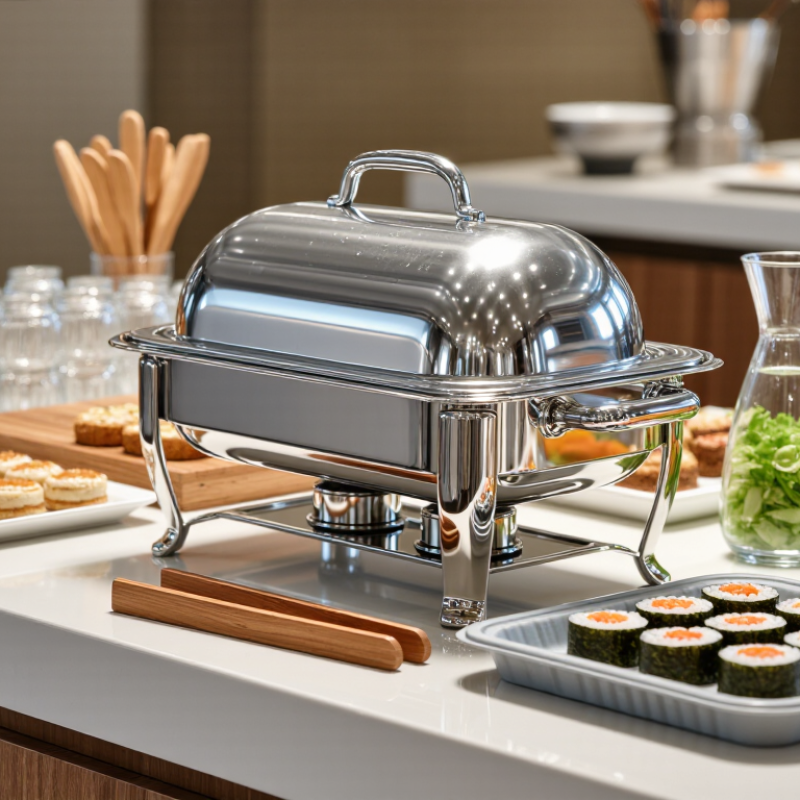
China’s commercial buffetware supply covers far more than serving trays. Common categories include stainless-steel chafing dishes, gastronorm pans, porcelain plates, melamine bowls, acrylic risers, beverage dispensers, and serving utensils. The 1/1 GN pan, measuring about 530 × 325 mm, fits many hotel buffet counters and heated stations. Stainless steel suits busy breakfast service because it resists dents, staining, and repeated washing. However, thin metal may warp under constant heat.
Industry reports place foodservice equipment within a growing global market. Allied Market Research estimated this market at about USD 37.6 billion in 2021, with expansion expected through 2030. China’s manufacturing base supports both standard and customized buffetware, including stackable designs and replaceable lids. Commercial buyers should check steel grade, weld quality, hinge strength, and compatibility with induction or electric heating. Appearance alone is not enough.
The 2024 UNEP Food Waste Index Report reported over one billion meals wasted daily worldwide. Portion-control bowls, smaller serving spoons, and divided trays can help reduce over-serving in hotels and institutional dining rooms. Porcelain creates a refined table setting, while melamine reduces breakage during high-volume service. Yet melamine requires careful review of food-contact compliance and temperature limits in the destination market. From practical purchasing experience, sample testing often reveals uneven edges, weak handles, or lids that close poorly. That extra inspection feels slow, but it prevents expensive replacement and unsafe service conditions.
Key Materials and Quality Standards for Buffetware
Commercial buffetware from China should be judged by materials, not appearance alone. In daily service, 304 stainless steel is a dependable choice for chafing dishes, trays, and serving utensils. Its chromium and nickel content supports corrosion resistance during repeated washing. However, the material grade should be verified, not assumed from a product description. Request a mill certificate or food-contact test report for each production batch.
Porcelain buffet dishes provide heat stability and a clean presentation. Look for even glazing, smooth rims, and no pinholes under bright light. Tempered glass is useful for lids and display panels, but small edge chips can become serious weaknesses. Check the hinges, welds, handles, and tray corners by hand. A polished finish may hide thin walls. That mistake is easy to make. Suppliers should also provide dimensional tolerances, load testing, and surface inspection records. Requirements may differ by destination market, so documentation should match the intended use and local food-contact rules.
Tips: Ask for a sample before placing a bulk order. Test it with hot food, steam, detergent, and repeated handling. Measure heat retention and inspect stains after washing. Do not rely on photographs. A minor mismatch between samples and mass production can disrupt an entire buffet line, and I have seen this overlooked during rushed purchasing.
Essential Buffetware for Different Food Service Settings
Commercial buffetware from China can support hotels, restaurants, caterers, and institutional kitchens. The right selection depends on menu type, service volume, and cleaning routines. Stainless steel trays suit hot dishes and frequent use. Porcelain plates create a refined dining experience. Durable melamine works well for outdoor events and busy cafeterias, but it needs careful temperature guidance. For breakfast buffets, choose divided trays, cereal dispensers, and covered containers. For banquet service, matching platters and chafing dishes improve presentation.
Different settings need different details. Hotels often require large-capacity warmers and elegant serving utensils. Schools may prioritize lightweight pieces, rounded edges, and simple stacking. Healthcare facilities need easy-to-sanitize surfaces and clear portion control. When sourcing from China, request material specifications, food-contact test reports, and sample inspections. Check welds, hinges, handles, and lid alignment. Small defects can become daily problems. I once overlooked stackability, and storage became frustrating.
Tips: Measure your service counter first. Confirm tray dimensions before ordering. Ask about replacement parts and packing protection. Test several samples under real cleaning conditions. Do not judge quality from photos alone. A polished surface may still scratch easily. Also review temperature limits for each material. Suppliers should explain production timelines, quality checks, and export documentation clearly. Keep records of batch details. That makes future reordering more reliable.
What Are the Best Commercial Buffetware Supplies from China? - Essential Buffetware for Different Food Service Settings
| Buffetware Category | Recommended Food Service Setting | Common Material | Typical Capacity or Size | Key Performance Features | Suitable Food Types | Cleaning and Handling Notes |
|---|---|---|---|---|---|---|
| Chafing Dish | Hotels, banquet halls, weddings, catering events | Stainless steel with a polished or brushed finish | Full-size: approximately 8–9 L; half-size: approximately 4–5 L | Covered presentation, water pan, food pan, and compatible heat source; helps maintain serving temperature | Entrées, vegetables, rice, pasta, sauces, and stews | Use food-safe fuel or approved electric heating systems; remove food residue promptly and dry stainless steel after washing |
| Electric Bain-Marie | Commercial buffets, restaurants, cafeterias, institutional dining | Stainless steel body with thermostatic heating controls | Usually 2–6 food pans, commonly using GN 1/1, GN 1/2, or GN 1/3 formats | Even water-bath heating, adjustable temperature control, and stable countertop operation | Hot side dishes, soups, gravy, curries, and prepared meals | Check electrical requirements before installation; drain and clean the water reservoir after service |
| GN Stainless Steel Food Pan | Hotels, catering kitchens, self-service lines, food preparation areas | Food-grade stainless steel, commonly 18/8 or 18/10 grades | GN 1/1: approximately 530 × 325 mm; depths commonly 65, 100, 150, or 200 mm | Stackable, durable, compatible with many buffet and storage systems | Hot foods, cold salads, desserts, ingredients, and prepared foods | Confirm pan depth and corner radius compatibility; most stainless pans are dishwasher suitable |
| Melamine Serving Platter | Breakfast buffets, hotels, bakeries, casual dining, outdoor events | Food-grade melamine resin | Common lengths range from approximately 300 to 600 mm | Lightweight, impact resistant, available in multiple shapes and finishes | Cold cuts, fruit, sandwiches, pastries, salads, and desserts | Do not use in ovens or under direct heat; follow the supplier's dishwasher and temperature guidance |
| Porcelain or Ceramic Serving Dish | Upscale hotels, restaurants, weddings, and plated buffet presentations | Glazed porcelain or vitrified ceramic | Small bowls of approximately 0.5–1.5 L; platters commonly 250–400 mm wide | Professional appearance, non-porous glazed surface, and good resistance to food staining | Desserts, salads, appetizers, sauces, and premium side dishes | Heavier and more fragile than plastic alternatives; inspect regularly for chips and cracks |
| Glass Beverage Dispenser | Breakfast service, cafés, outdoor catering, parties, and self-service beverage stations | Clear soda-lime glass with stainless steel or food-grade plastic tap | Common capacities range from 3.8 to 8 L | Visible beverage level, tap dispensing, and decorative presentation | Water, iced tea, fruit drinks, lemonade, and infused beverages | Place on a stable surface; disassemble and clean the tap to prevent residue buildup |
| Insulated Beverage Urn | Conferences, offices, breakfast buffets, banquet service, and large events | Double-wall stainless steel with insulated body | Common capacities range from 6 to 20 L | Retains heat or cold without continuous heating, with a controlled dispensing tap | Coffee, tea, hot water, chilled water, and non-carbonated drinks | Use a stable trolley or counter; clean seals, taps, and inner walls after every service |
| Serving Utensil Set | All buffet lines, catering operations, cafeterias, and restaurant service | Stainless steel, with optional heat-resistant nylon handles | Typical lengths range from 250 to 350 mm | Includes serving spoons, slotted spoons, ladles, tongs, and cake servers | Solid foods, sauces, salads, noodles, pastries, and desserts | Assign one utensil to each dish to reduce cross-contact; wash and sanitize between uses |
| Condiment and Topping Container | Breakfast bars, salad stations, dessert counters, sandwich shops, and cafés | Stainless steel, polycarbonate, acrylic, or food-grade polypropylene | Usually 0.3–2 L per container | Compact footprint, removable inserts, lids, and easy portion access | Sauces, dressings, cereals, nuts, olives, sprinkles, and toppings | Use covered designs for open buffets; label allergens where applicable and replenish in small batches |
| Acrylic or Polycarbonate Food Display | Bakeries, cafés, dessert counters, hotel lobbies, and retail food displays | Acrylic or impact-resistant polycarbonate | Single- or multi-tier formats; common display widths range from 250 to 600 mm | Clear visibility, lightweight construction, and protection from dust and handling | Cakes, pastries, sandwiches, cookies, fruit, and packaged snacks | Avoid abrasive cleaners that can scratch surfaces; keep away from high heat unless specifically rated for it |
How to Evaluate Chinese Buffetware Manufacturers
When evaluating Chinese buffetware manufacturers, treat factory evidence as more important than polished catalogs. China’s manufacturing sector contributed about 31% of global manufacturing value added in 2023, according to UNIDO’s Industrial Development Report 2024. That scale creates strong production options, but quality can still vary between workshops.
Request recent audit records, production photos, and references for stainless steel trays, chafing dishes, dispensers, and serving utensils. Ask for material grades, wall thickness, temperature limits, and polishing standards. Small details matter.
Use measurable tests. A qualified supplier should provide food-contact material declarations, batch traceability, and inspection records before shipment. Request samples from current production, not specially prepared samples. Check weld seams under bright light, lid alignment, sharp edges, surface staining, and how easily grease is removed.
The 2023 World Bank Logistics Performance Index gave China a score of 3.7 out of 5, showing strong logistics capability, but delivery reliability still depends on factory planning and port distance. Confirm carton dimensions, drop-test procedures, spare-part availability, and replacement terms in writing.
Do not rely on certificates alone. Verify the issuing body and certificate scope. A factory may pass a document review yet fail a practical durability test. That is an uncomfortable gap.
Use a third-party pre-shipment inspection with sampling based on ISO 2859-1 principles, and compare results across two production batches. No audit is perfect. Your own sample testing remains essential.
Lower prices can hide thinner metal, weaker hinges, or inconsistent finishing, while a slightly higher quotation may reduce breakage and service complaints.
Ordering, Customization, and Import Considerations
China remains a practical source for commercial buffetware, including stainless-steel trays, ceramic dishes, chafing frames, and acrylic risers. The UN Comtrade database shows China as a major exporter across tableware categories, especially ceramic and metal products. Ordering should begin with measurable details: tray dimensions, food-contact materials, heat limits, carton strength, and replacement availability. In my sourcing experience, unclear drawings create expensive revisions. A sample can look excellent, yet fail during repeated washing.
Customization is widely available, from embossed logos to unusual tray depths and modular display systems. However, low minimum order quantities often increase unit costs. The 2024 Global Foodservice Equipment Market analysis by Grand View Research identifies hospitality expansion and operational efficiency as key demand drivers. That supports durable, stackable designs, but market reports cannot predict every factory’s consistency. Request material certificates, inspection photos, production samples, and a written tolerance sheet. For imports, calculate more than the product price. Include inland transport, export packing, ocean freight, insurance, customs duties, and destination handling. HS classification must match the actual material and function.
Tips: Ask for a pre-production sample. Confirm food-contact documentation. Use third-party inspection before shipment. Compare landed cost, not quotation price. Also check whether wooden pallets meet destination import rules. A 2023 report from the International Chamber of Commerce notes that documentary errors remain a common trade friction point. I would not trust verbal promises alone. A signed specification protects both sides, although it still needs practical monitoring.
FAQS
304 stainless steel is a dependable option for trays, chafing dishes, and serving utensils. It resists corrosion during repeated washing. Verify the grade with a mill certificate or food-contact test report.
Check for even glazing, smooth rims, and no pinholes under bright light. Run a finger around every edge. Small surface flaws can worsen with heat and washing.
Inspect lids and display panels for edge chips, cracks, and loose fittings. Check hinges and handles by hand. A tiny chip may become a serious weakness.
Samples reveal heat retention, staining, and handling problems. Test them with hot food, steam, detergent, and repeated washing. Photographs are not enough.
Ask for material grades, wall thickness, temperature limits, and polishing standards. Request batch traceability and inspection records. Recent audit records and production photos are also useful.
Inspect weld seams under bright light. Check lid alignment, sharp edges, tray corners, and grease removal. Compare samples from current production, not specially prepared pieces.
Confirm carton dimensions, drop-test procedures, delivery planning, spare parts, and replacement terms. Port distance can affect timing. Logistics may look strong, yet delays still happen.
No certificate is perfect. Verify the issuing body and its scope. Add third-party inspection and your own testing. I would still compare two production batches.
Lower prices may hide thinner metal, weak hinges, or uneven finishing. Breakage can interrupt an entire buffet line. A higher quotation may reduce service complaints, but not always.
Conclusion
China offers a broad range of Commercial Buffetware Supplies for hotels, restaurants, catering companies, banquet halls, and institutional dining facilities. Common products include chafing dishes, serving trays, soup kettles, food pans, beverage dispensers, utensils, display stands, and table accessories. Buyers should compare materials such as stainless steel, aluminum, glass, ceramic, melamine, and durable food-grade plastics, while checking finish quality, heat resistance, corrosion protection, structural strength, and ease of cleaning. Reliable products should be designed for repeated commercial use and meet applicable food-contact and safety requirements.
The best buffetware selection depends on the service environment, menu, operating capacity, and presentation style. When evaluating Chinese manufacturers, purchasers should review production capabilities, quality-control procedures, samples, customization options, packaging standards, and communication efficiency. Ordering decisions should also consider minimum quantities, lead times, private labeling, product dimensions, shipping arrangements, import documentation, duties, and destination-country regulations. Clear specifications and pre-shipment inspections can help reduce errors and ensure the final buffetware investment is practical, consistent, and suitable for long-term food service operations.

Blog Tags: